Published 26 October 2026
Share this article
The Human Side of Lubricants: Building Trust, Sharing Knowledge and Finding Your Own Path
From an unexpected career in the lubricants industry to becoming The Oil Lady, Wendy Hakken Laporte shares her experiences of technical selling, personal branding, AI and inspiring the next generation.
Few people grow up dreaming of a career in lubricants. Yet for those who find their way into the industry, it often becomes much more than simply a job. It opens doors to remarkable businesses, complex technologies, fascinating people and opportunities that might never have been considered.
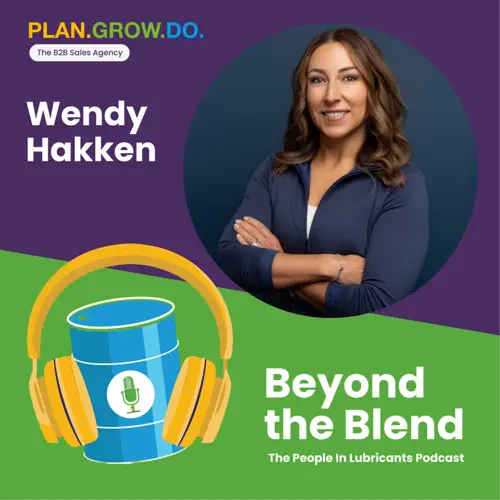
In this episode of Beyond The Blend, Steve Knapp speaks with Wendy Hakken Laporte, better known as The Oil Lady, about her unconventional career journey and the lessons she has learned along the way.
Their conversation moves from the steel mills of Chicago to social media, OEM dealerships, artificial intelligence and the challenges of attracting new talent. Throughout, one theme keeps returning: whatever technology brings to the lubricants industry, the knowledge, curiosity and authenticity of its people will continue to matter.
It is a conversation about how we learn, how we communicate and how we create value for the people who depend on our industry every day.
1. An Accidental Career That Became a Passion
Finding an industry you never knew existed
Wendy’s journey into lubricants began a long way from the industrial environments she now knows so well. Having studied Spanish language and literature at Michigan State University, she moved to Chicago and worked in health and fitness while exploring a potential career in law enforcement. A chance encounter with a customer at the gym led to an interview with a local oil distributor.
What followed was an introduction to an industry she had barely considered. The activity around Chicago’s industrial parks, the machinery, the trucks and the scale of the businesses immediately captured her imagination. A marketing role provided the starting point, but the real attraction was still to come.
The steel mill that changed everything
A defining moment came when Wendy shadowed one of the distributor’s most successful salespeople on visits to steel mills around Chicago. Suddenly, the products she had been helping to market had a practical purpose she could see and understand.
She watched how fluids supported machinery, how technicians monitored operating temperatures and how lubricant sampling formed part of maintaining equipment reliability.
It was an experience that changed her career direction. Her mentor introduced her to the Certified Lubrication Specialist (CLS) study materials, encouraging her to develop a deeper technical understanding. What started as curiosity soon became a genuine enthusiasm for the application of lubricants.
Building a career through curiosity and opportunity
From those early distributor experiences, Wendy developed a career spanning industrial field sales, OEM dealerships and major lubricant manufacturers, including Shell and Valvoline, where she currently works in key account management.
Her journey demonstrates how varied careers within the lubricants sector can become. She moved from selling directly to industrial customers to supporting dealership networks and managing complex manufacturer relationships.
Each step required different skills, greater commercial understanding and the ability to work with new groups of people.
There is an important lesson in her experience. A career does not always need a perfectly defined destination at the beginning. Sometimes curiosity, willingness to learn and the right opportunities provide a valuable direction of their own.
2. Knowledge, Confidence and the Art of Keeping Things Simple
Why technical knowledge builds commercial confidence
Wendy’s early exposure to machinery and maintenance gave her a perspective that would shape her approach to selling. She recognised that recommending a lubricant required more than understanding the product catalogue.
It meant understanding operating conditions, equipment requirements and the practical consequences of selecting the wrong solution.
Without a formal technical degree, she invested heavily in developing her own knowledge through certifications, reading, mentoring and customer visits. She also describes regular breakfast meetings with Gary Steele at Shell, where they would explore specific technical subjects in detail.
This willingness to learn helped Wendy become a more confident, consultative salesperson, able to engage customers through genuine application knowledge.
The commercial value of making complicated things simple
One of Wendy’s strongest observations is that the lubricants industry has become unnecessarily difficult for many customers to understand.
Complex products often require complex science, but that does not mean every conversation needs to be filled with complicated terminology.
Wendy discovered that explaining technical topics in everyday language helped customers and dealership teams become more confident in their own understanding.
That confidence made it easier for them to discuss products, answer questions and recommend appropriate solutions.
She witnessed a direct commercial benefit from education, particularly while training OEM dealerships.
Greater understanding created greater confidence, and that confidence helped people sell more effectively.
Teaching others strengthens our own expertise
Another interesting part of Wendy’s approach is how she used content creation to reinforce her own learning.
After studying technical topics with her mentors, she would turn that knowledge into short videos, explaining concepts such as viscosity, additives and product applications to her audience.
The process forced her to organise what she had learned and communicate it in a way that other people could understand.
It is a useful reminder for any salesperson or technical professional. Being knowledgeable is important, but being able to communicate that knowledge effectively is an additional skill.
For those responsible for developing salespeople, creating opportunities to teach, explain and demonstrate can be a valuable part of the learning process.
Understanding the problem before presenting the solution
Steve and Wendy explore the tendency for lubricant companies to focus heavily on product specifications, brand messages and sales volumes.
Yet the customer is often looking for something considerably more practical: a solution to a particular problem.
Understanding the equipment, the operating environment and the consequences of failure helps the salesperson connect technical features to outcomes that matter.
This closely reflects the thinking behind Plan Grow Do’s article, From Volume to Value: Building Long-Lasting Lubricant Commercial Relationships Through Application-Led Conversations.
For lubricant professionals, technical expertise becomes particularly valuable when it helps customers understand the decisions they need to make and the outcomes they can reasonably expect.
3. The Oil Lady: When Personal Branding Creates Real Business Value
Starting with stories people actually wanted to read
Long before The Oil Lady became established on social media, Wendy was experimenting with ways to maintain relationships across a large sales territory.
Her newsletter, Oil Adventures with Wendy, included technical information and industry news alongside personal stories from customer visits.
Interestingly, it was the stories that attracted the most attention.
Customers began asking when their businesses might feature in her next article, creating conversations and relationships that went beyond conventional sales activity.
Wendy had discovered something valuable. People were interested in seeing the industries around them, understanding unfamiliar applications and learning through the experiences of someone who genuinely enjoyed her work.
Creating a personal brand with genuine commercial impact
When the pandemic changed how salespeople could engage customers, Wendy expanded her approach through Instagram and TikTok.
The Oil Lady became an opportunity to showcase heavy machinery, explain lubrication concepts and introduce audiences to industrial environments rarely featured in mainstream social media.
It also generated business.
Wendy describes receiving enquiries from across the United States, including customers seeking technical advice and lubricant recommendations. Where these opportunities fell outside her sales territory, she connected the customers with local distributors.
Her employers recognised that this unconventional activity was creating visibility and commercial opportunities.
It demonstrated how an individual salesperson’s reputation could create value beyond their immediate customer relationships.
People, brands and the importance of trust
Steve introduces findings from Plan Grow Do’s Buyer Revolution research, particularly the relationship between corporate reputation and individual trust.
The research found that 88.2% of lubricant buyers prioritise reputation when considering a new provider, while 68.8% say personalised communication builds greater trust than corporate messaging.
These findings provide an interesting context for Wendy’s experience.
An established manufacturer may provide reassurance through its reputation, technical credentials and product quality. However, the individual representing that business influences how customers experience those qualities.
Wendy’s personal brand has helped make technical knowledge accessible while providing a recognisable human connection.
Explore the research: Do Buyers Place Greater Trust in People or in the Brand?
Being memorable without losing credibility
The Oil Lady also demonstrates that personality and technical credibility can work together.
Wendy’s memorable slogan, “Lube It or Lose It”, came from a competition among her social media followers. It became a popular addition to stickers shared with customers, often finding a home on hard hats and toolboxes.
The phrase was simple, amusing and relevant to the importance of maintaining machinery.
It also helped people remember Wendy.
There is a wider lesson here for sales and marketing teams. Industry expertise provides substance, while personality and memorable communication help that expertise reach people. Both can contribute to building relationships that endure beyond an individual sales conversation.
4. AI, Authenticity and the Changing Value of the Salesperson
Why authenticity is becoming more important
Wendy expresses concern about the increasing volume of AI-generated content appearing on professional platforms, particularly LinkedIn.
Her frustration centres on the loss of personality and genuine experience within communication.
For Wendy, being human means being authentic, sharing real opinions, acknowledging mistakes and continuing to learn.
She recognises the usefulness of AI tools and uses them herself, particularly for organising information and developing ideas. However, she believes people still want to hear directly from other people.
As automated content becomes easier to produce, genuine experiences, practical insights and individual perspectives may become increasingly valuable ways for professionals to build trust.
The buyer’s changing journey and the role of validation
Steve raises an important question during the discussion: if buyers can increasingly research products and find information independently, at what point does the salesperson become most valuable?
Wendy agrees that customers can now begin much of their journey without speaking to a supplier.
However, researching a product and knowing it is appropriate for a particular application are different challenges.
This aligns with Plan Grow Do’s Buyer Revolution research into how far lubricant buyers progress before contacting sales.
The opportunity for salespeople increasingly lies in understanding what the buyer has already discovered, identifying potential gaps and helping validate the decisions they are considering.
When an AI recommendation needs a human expert
Wendy provides a practical example involving someone asking AI which oil should be used in a Caterpillar D9 dozer.
An AI system might generate a recommendation, but how confident can the customer be that it accounts for all relevant OEM specifications, equipment requirements and operating conditions?
These are questions where mistakes can have serious practical consequences.
Wendy sees considerable potential for AI-supported tools, provided they operate with appropriate safeguards and accurate technical information.
Her concern is that customers may place too much confidence in an answer without understanding how that answer was produced.
The lubricant professional therefore retains an important responsibility for checking recommendations and providing context.
Using technology while protecting human judgement
The conversation is optimistic about AI’s potential, although both Steve and Wendy recognise the risks of adopting technology without sufficient consideration of its consequences.
Wendy describes using AI to review information and support brainstorming while retaining ownership of her communications and decisions.
For businesses, this presents a wider challenge. How can organisations introduce useful AI capabilities while maintaining accuracy, technical accountability and customer trust?
Plan Grow Do explores a related question in The More AI We Use, the More Human Sales Needs to Become.
Technology can support research, preparation and productivity. Its commercial value will depend on how effectively people use it to improve the decisions and experiences of their customers.
5. Getting Back to the Workshop: Understanding the People We Serve
The danger of becoming disconnected from the end user
Moving from distributor field sales into strategic OEM account management changed the nature of Wendy’s working relationships.
Instead of spending most of her time with equipment operators and maintenance teams, she increasingly found herself involved in corporate planning, leadership discussions and managing complex account relationships.
While these responsibilities were important, Wendy noticed that some of her most useful customer insights still came from being directly involved in the field.
Visiting dealerships, workshops and equipment operators helped her maintain an understanding of their actual challenges.
It raises a worthwhile question for commercial leaders: how closely connected are our sales strategies to the people who ultimately use our products?
Learning from customers and colleagues
Wendy strongly advocates spending time alongside colleagues from different disciplines and visiting customers outside one’s immediate responsibilities.
These experiences provide opportunities to understand different applications, working practices and customer expectations.
They also help challenge assumptions.
A salesperson focused primarily on account strategy may see the relationship differently from the technician responsible for keeping machinery operational.
Both perspectives matter, but understanding the differences can lead to better conversations and recommendations.
Wendy summarises her own preference when asked to choose between a workshop and a stage. She chooses the workshop because that is where she gathers the experience and insight she can later share with others.
Better lubrication starts with better knowledge
The discussion also highlights the practical consequences of gaps in lubrication knowledge.
Wendy recognises the substantial research and development investment made by reputable lubricant manufacturers, but good products still depend on appropriate selection and application.
Understanding viscosity, operating temperature, additives and equipment requirements is essential to making informed decisions.
She also describes the different attitudes encountered among equipment owners. Some will follow their manuals precisely, while others may rely on practices inherited from previous generations.
An experienced lubricant professional can help customers understand the reasoning behind recommendations, identify appropriate alternatives where permitted and explore opportunities to simplify lubricant inventories.
The value of being useful beyond the product
For Steve, Wendy’s experience reinforces the importance of application-led selling.
A supplier may offer excellent products, strong technical documentation and an established brand. However, the value experienced by the customer depends on how effectively those resources help them operate their equipment.
That requires salespeople to understand real problems, communicate clearly and remain interested in what happens after the product is supplied.
It also means recognising where customers need education rather than another sales message.
The future lubricant salesperson has an opportunity to become a trusted source of practical insight, helping customers make sense of increasingly complex choices while keeping their operational requirements firmly in view.
6. Inspiring the Next Generation to Blaze Their Own Path
Challenging assumptions about industrial careers
Wendy’s passion for developing people extends well beyond lubricants.
Reflecting on her own university experience, she describes entering higher education without a clear career plan and accumulating debt while studying a subject unrelated to her eventual profession.
This experience helped motivate her involvement in Crew Collaborative, a non-profit organisation committed to increasing awareness of career opportunities within construction and related industries.
Its message is that young people should understand the range of options available before deciding on their future.
University can be the right choice, but apprenticeships, technical training and industry-based careers can provide equally meaningful opportunities for the right individuals.
Introducing young people to real industry professionals
Crew Collaborative works with schools through virtual classroom sessions, bringing together professionals from different industrial backgrounds to discuss their experiences.
Typically, a group of eight to ten volunteers explains their roles, career journeys, earning potential and what they enjoy about their work.
Students can ask questions and discover opportunities they may never previously have considered.
Wendy believes the approach works partly because young people encounter professionals they can relate to.
Rather than hearing abstract descriptions of unfamiliar occupations, they meet individuals who can explain what the work actually involves and how they built their careers.
Visibility helps create possibilities.
The responsibility to develop future talent
The skills challenge is familiar across many industrial sectors, including lubricants.
Wendy’s experience highlights an interesting issue. Many rewarding industry careers remain largely invisible to people outside the sectors that depend on them.
The construction industry requires technicians, mechanics, operators and engineers, alongside salespeople, commercial specialists and numerous supporting roles.
Lubricants provide similarly varied opportunities across manufacturing, technical services, distribution, research and customer support.
For Wendy, encouraging new talent to explore these careers has become an important personal ambition.
Her own story demonstrates what can happen when someone is introduced to an industry they never previously knew existed.
Creating opportunities for the people who follow
As the conversation draws towards its conclusion, Wendy discusses the importance of allowing young people to pursue their interests rather than placing them into predetermined career paths.
She applies that philosophy both through her work with Crew Collaborative and within her own family.
Looking ahead, she hopes to dedicate more attention to promoting careers specifically within the lubricants industry.
Her closing advice to anyone considering joining the sector is encouraging: “You’ll be able to blaze a path for yourself.”
It captures much of her own experience.
The industry offers considerable variety, and those prepared to develop their knowledge, seek opportunities and take responsibility for their careers have the potential to shape a future that is uniquely their own.
Conclusion: The Future Still Needs People
Wendy Hakken Laporte’s journey from a Chicago gym to becoming The Oil Lady is a reminder of how much opportunity exists within an industry that many people know very little about.
Her career has been shaped by curiosity, mentors, technical learning, customer relationships and the willingness to approach familiar challenges differently.
Throughout her conversation with Steve Knapp, the importance of people remains central.
Technical knowledge matters, but so does making it understandable. Personal branding creates opportunities when it is supported by genuine experience. AI offers significant potential, provided accuracy and human judgement remain part of the process. And the industry’s future depends on encouraging the next generation to discover the opportunities available to them.
Perhaps the most important takeaway is that the role of the lubricant professional continues to evolve.
Customers have more information available than ever before, yet they still need people who can help them understand it, validate decisions and apply knowledge to real situations.
That creates an opportunity for an industry built around complex products and practical problems.
If we can become better at sharing our expertise, telling our stories and helping others develop, we can build stronger customer relationships while opening doors for the people who will shape the industry next.
The future of lubricants will involve new technologies, new commercial models and new ways of working.
It will also continue to need people who care enough to understand the industry and the customers it serves.
Listen to Beyond The Blend
This article was inspired by Steve Knapp’s conversation with Wendy Hakken Laporte, The Oil Lady, on Beyond The Blend, the podcast from Plan Grow Do exploring the personal and professional journeys of the people behind the global lubricants industry.
Their discussion covers technical selling, the development of Wendy’s personal brand, artificial intelligence, the importance of maintaining customer connections and her work inspiring the next generation.
Watch a preview: Steve Knapp and Wendy Hakken Laporte on simplifying technical knowledge and improving sales
Listen to the episode:
- 🎙️ Beyond The Blend with Wendy Hakken Laporte on Spotify
- 🎧 Beyond The Blend with Wendy Hakken Laporte on Apple Podcasts
- 🎬 Watch the conversation on YouTube
Subscribe or follow Beyond The Blend on your preferred platform for more conversations exploring the people, experiences, challenges and opportunities that make the lubricants industry such an interesting place to build a career.
For more insights into the changing expectations of lubricant buyers, modern sales practices and the opportunities presented by AI, visit Plan Grow Do.