Published 28 July 2026
Share this article
People, Curiosity and the Power of Life long Learning
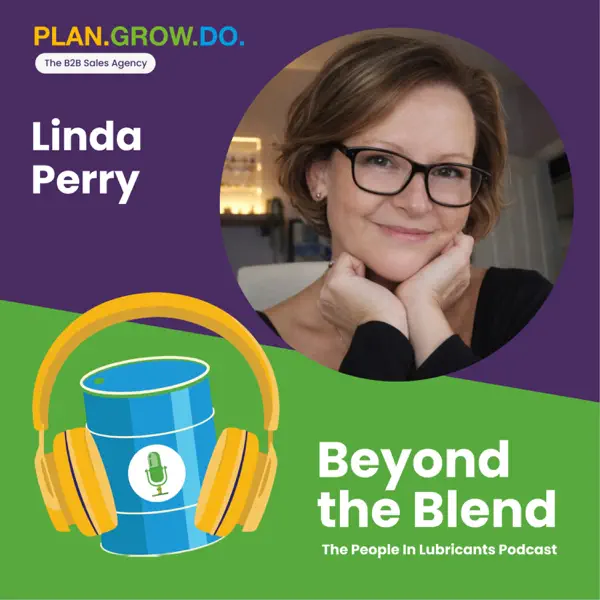
The lubricants and reliability industries may be built on chemistry, engineering and technical expertise, but they are ultimately moved forward by people. In a recent episode of Beyond the Blend, Steve Knapp spoke with Linda Perry about a career spanning laboratories, customer service, sales, leadership, business development and education. While Linda’s experience is deeply technical, the conversation repeatedly returned to trust, relationships, curiosity and helping others succeed. Her story offers valuable lessons for anyone building a career, leading a team or trying to create a more collaborative and customer-focused organisation.
A Career Shaped by Curiosity and Opportunity
Recognising the opportunities that change our direction
Linda did not begin her working life with a carefully mapped plan to spend almost four decades in laboratories, lubrication and reliability. Her early roles included working at a theme park and selling insurance before an opportunity arose at Herguth Laboratories. At the time, it appeared to be a good job, close to home and connected to an industry her family already understood. Only later did she recognise it as the moment that changed everything. Careers are often shaped by decisions that seem relatively ordinary at the time. The real value of an opportunity may only become clear after years of experience, reflection and growth.
How early curiosity can influence a career
Linda’s interest in science began long before she entered a laboratory. As a child, she was given a microscope and immediately began examining anything she could find. That sense of fascination continued through school, where chemistry and biology captured her attention. Her family background also provided a strong connection to oil, gas and industrial work. Her father spent 46 years with UniCal, while several of her brothers also worked in related fields. What appeared to be an unexpected career eventually felt like a natural combination of family influence, scientific curiosity and the right opportunity arriving at the right point in her life.
Understanding the Whole Business
Why cross-functional experience creates better employees
One of the most valuable parts of Linda’s early development was the opportunity to spend time in every department at Herguth Laboratories. She worked in reception, customer service, the laboratory, sample diagnosis, procurement, sales and marketing. This gave her a practical understanding of how the business operated and how each department affected the customer. By the time she was responsible for customer conversations, she could explain processes with credibility and understand what was happening behind the scenes. Cross functional onboarding helps people see beyond their individual role. It creates stronger communication, greater empathy between departments and a clearer understanding of the full customer experience.
Breaking the habit of organisational silos
Linda believes many businesses still suffer because departments operate independently. Procurement, reliability, safety, quality, laboratories, sales and customer service may all have their own priorities, systems and performance measures. However, the decisions made in one area can create significant consequences elsewhere. A receptionist may receive information that affects quality. A laboratory may develop something sales teams should communicate to customers. Reliability teams may understand the long-term consequences of a purchasing
decision. Businesses become more effective when information flows openly and departments understand their shared responsibility. Collaboration is not simply about holding more meetings. It is about recognising how every decision affects the wider organisation.
The Lasting Impact of Great Mentorship
Seeing potential before someone sees it themselves
Linda credits much of her development to Bill Herguth, who recognised qualities in her that she had not yet recognised in herself. At the beginning of her career, she describes herself as quiet and uncertain. Bill provided knowledge, encouragement and opportunities that allowed her confidence to grow. He trusted her to work with customers, attend conferences and participate in training and plant visits. Great mentors do more than share advice. They identify potential, create opportunities and allow people to develop through meaningful responsibility. Their influence can continue for decades because the person being mentored often carries those lessons into the way they support and lead others.
Building a business by helping people succeed
Bill Herguth’s influence was not based only on technical knowledge or commercial success. Linda remembers him as someone who genuinely cared about employees, customers, suppliers and other businesses in the industry. He wanted people to succeed and was willing to offer his resources, knowledge and connections to help them. That approach shaped Linda’s own philosophy. She now focuses on understanding what customers need and connecting them with the right equipment, consultant, standard, training or service. Commercial success becomes a result of creating value and building trust. When customers believe someone is genuinely invested in their success, the relationship becomes stronger than a conventional buyer and supplier transaction.
Trust in a Digital and AI-Enabled World
Why human connection is becoming more valuable
Artificial intelligence can now create proposals, emails, quotations, presentations and social media content. These tools can improve speed and productivity, but they also make it harder for customers to distinguish between genuine expertise and automated communication. Linda believes this makes trust and personal connection more important, not less important. Customers need to believe there is a real person behind the message who will listen, respond and provide support when it matters. Face-to-face meetings, video conversations and thoughtful follow-up all help demonstrate authenticity. Technology can support relationships, but it cannot replace the confidence that comes from knowing someone understands the problem and will remain accountable for the outcome.
Looking beyond the product being sold
Customers do not always ask for the solution they genuinely need. They may describe a problem, request a service or ask for a specific product without recognising the wider issue. Linda sees her role as listening carefully, identifying what sits behind the request and helping the customer access the right resources. Sometimes the best recommendation may involve a service she does not personally provide. That willingness to look beyond the immediate sale creates trust. It demonstrates that the customer’s outcome matters more than protecting an individual commercial opportunity. The strongest suppliers understand the wider situation, educate the customer and help connect all the pieces of the solution.
Lifelong Learning and Professional Curiosity
Learning should not have an age limit
Linda completed both her bachelor’s and master’s degrees during her time with Herguth Laboratories and is now working towards a PhD. Her motivation is not simply to gain another qualification. She wants to demonstrate to her children, grandchildren, friends and colleagues that learning should never stop. Professional development does not have to be tied to promotion or a change of job. It can be driven by curiosity, personal challenge and the desire to make a wider contribution. Linda’s example challenges the idea that education belongs to the early stages of a career. Experience can create better questions, while continued learning helps people interpret that experience in new ways.
Connecting procurement decisions to long-term value
Linda’s doctoral research focuses on collaboration between procurement, reliability, safety and quality. Many purchasing decisions are still influenced heavily by immediate price. However, the cheapest oil, bearing, service or piece of equipment may create higher costs later through downtime, failure, poor performance or safety concerns. Linda argues that the people responsible for reliability, quality and safety should have greater involvement before purchasing decisions are made. The true cost of a product cannot always be seen on the initial invoice. Better collaboration helps businesses understand total value, long-term return and operational risk, rather than allowing short-term savings to create more expensive problems in the future.
Leadership That Moves Beyond Data
The difference between collecting information and improving
Most organisations can collect data, create performance indicators and report on activity. The more difficult challenge is using that information to improve the organisation. Linda believes leadership is the defining factor. Good leaders listen, value their employees and create opportunities for people to contribute and develop. They do not simply measure performance. They help teams understand why the work matters and how different departments contribute to shared results. Technology has made many management tasks more efficient, but leadership remains deeply human. It requires trust, consistency, judgement and a willingness to understand the experiences of the people doing the work.
Combining care with curiosity
During the conversation, Steve described care and curiosity as two important qualities in successful leaders. Care means taking responsibility for people, customers, results, wellbeing and the solutions being delivered. Curiosity means continuing to ask questions, challenge assumptions and look for better ways of working. Linda’s career demonstrates how powerful that combination can be. Care without curiosity may protect existing practices without questioning whether they remain effective. Curiosity without care may create change without understanding the impact on people. Leaders who combine both qualities are more likely to listen properly, identify the real problem and create solutions that work for customers,
employees and the wider organisation.
Community, Representation and Belonging
The professional value of industry relationships
Linda describes the reliability community as a family. Returning to an industry event after several years allowed her to reconnect with people she had known for decades. These relationships provide much more than enjoyable conversations at conferences. They create networks of trust through which professionals can share knowledge, recommend resources and connect customers with the right expertise. Industry events, travel and networking can sometimes feel repetitive, particularly when they involve time away from home. Their value depends on how people approach them. By asking thoughtful questions, renewing relationships and remaining open to learning, professionals can turn an event into a valuable source of ideas, support and opportunity.
How representation has changed
When Linda attended one of her earliest reliability exhibitions, she recalls there being only three women present. The industry was heavily male dominated, and women often had to work harder to establish technical credibility. Linda has since seen significant progress, supported by greater visibility, professional networks, social media, webinars and podcasts. More women are now able to share their expertise and build recognised voices within the sector. However, progress is not complete. Some frontline sales, technical and commercial teams remain less diverse. Representation matters because people from different backgrounds bring different experiences, questions and approaches. Those perspectives help industries challenge established thinking and develop stronger solutions.
Encouraging the Next Generation into STEM
The industry needs to tell a better story
Lubrication, reliability and industrial science offer varied and rewarding career opportunities, but many young people have little understanding of what the sectors involve. Linda believes the industry has a responsibility to communicate its story more effectively. Women in particular may assume these environments are not designed for them or that they will need to change their personality to succeed. Linda’s experience suggests the opposite. Empathy, communication and curiosity are valuable professional strengths. By increasing the visibility of different career paths and role models, the industry can show young people that technical work is not limited to one type of person, personality or background.
Curiosity should be encouraged early
Linda is already encouraging her granddaughter to explore science and STEM subjects. Her approach is not to force a particular career choice, but to provide experiences that create interest and curiosity. Practical experiments, laboratory visits and conversations about how science contributes to society can help young people understand why technical subjects matter. Early exposure is important because career perceptions often form before a young person fully understands the available options. Families, schools and businesses all have a role to play. The goal is not simply to encourage more people to study science. It is to help them see how their knowledge could solve problems and improve people’s lives.
Be Honest, Stay Humble and Keep Learning
When asked what advice she would give to the next generation entering the industry, Linda returned to a small number of powerful principles. Remain curious. Keep learning. Be honest. Stay humble. Most importantly, be yourself. Technical knowledge can be developed through education, training and experience. Trust, humility and authenticity are demonstrated through behaviour over time. People want to work with colleagues, leaders and suppliers they believe are genuine. Linda’s career shows that success does not require someone to have every answer or follow a perfectly planned route. It requires a willingness to learn, listen and help others move forward.
Summary
Linda Perry’s story is a reminder that even the most technical industries are shaped by relationships. Her career has crossed laboratories, customer service, sales, management, procurement, consulting and education, but the same principles have remained consistent throughout. Listen carefully. Understand the whole problem. Connect people with the right resources. Challenge organisational silos. Keep learning, regardless of age or experience. Build trust through honesty, humility and genuine care. The future of the lubricants and reliability sectors will depend on technical innovation, but it will also depend on leaders who can bring people together, create opportunities and inspire the next generation to remain curious.
Listen to Beyond the Blend
This article was inspired by Steve Knapp’s conversation with Linda Perry on Beyond
the Blend, the podcast exploring the people, careers and experiences behind the
lubricants industry.
Subscribe to Beyond the Blend on your preferred podcast platform to hear more
honest conversations with the people helping to shape the sector. Follow the podcast
so you never miss a new episode.
Spotify: https://lnkd.in/evKubBmf
Apple: https://lnkd.in/ecu_uTiq
YouTube: https://lnkd.in/epXxJ3p8