Published 14 May 2026 · Last updated 15 July 2026
Share this article
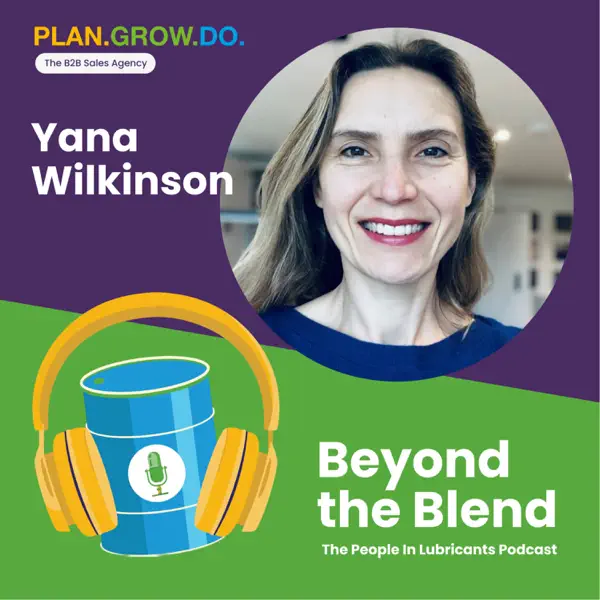
Insight Over Information: Yana Wilkinson on Culture, Curiosity and Commercial Change
In this episode of Beyond the Blend, Rob Taylor sits down with Yana Wilkinson for a thoughtful conversation that moves far beyond market reports and industry data.
Together, they explore what really drives better business decisions in today’s lubricants industry, from organisational culture and leadership self-awareness through to insight generation, collaboration, talent development, and the growing influence of AI.
At the heart of the discussion is a simple but powerful idea: information alone is no longer enough. In a world overflowing with data, the real value increasingly comes from interpretation, curiosity, human judgement, and the ability to help others think more clearly about the decisions they face.
Moving Beyond “Market Research” Into Decision Support
Yana reframed market research as something much broader than reports and data. She positioned Kline as a “decision support business” helping organisations make better strategic and commercial choices. The emphasis was not on simply providing information, but on turning information into useful insight that helps leaders act with greater confidence. She explained that many businesses no longer lack information, but instead struggle to interpret what matters most and how to respond to it effectively. This distinction between information and actionable insight became one of the strongest themes throughout the episode.
Insight Versus Information in the Modern Commercial World
A major discussion point centred around the difference between information and insight. Yana argued that information is now widely accessible, but insight is the ability to connect dots, interpret trends, and support meaningful decision-making.
Rob linked this directly to modern sales teams and the rise of AI, highlighting that buyers can already access huge amounts of product information independently. The future value of commercial professionals, therefore, lies not in repeating information, but in applying expertise, interpretation, and practical guidance that buyers cannot simply search for online.
The Importance of Organisational Culture
Culture emerged as one of the defining themes of the conversation. Yana challenged
the popular phrase “culture eats strategy for breakfast,” arguing instead that culture and strategy should work together. She described culture as a series of behaviours and decisions rather than a set of vague values written on a website. The conversation explored how leadership behaviour shapes culture more than corporate statements do, and how organisations need to be honest and clear about the type of environment they are building if they want to attract the right people.
Leadership Through Self-Awareness
One of the most compelling moments in the discussion came when Yana spoke about recognising her own strengths and limitations. Rather than trying to become “perfect” in every area, she explained the importance of building teams around complementary strengths. She described herself as someone who thrives in deep focus, while recognising the value of colleagues who bring “busy energy” and different approaches. This created a wider conversation about leadership self-awareness, collaborative leadership models, and the importance of building imperfectly perfect teams rather than chasing idealised individuals.
Talent Attraction and Meaningful Work
The discussion explored why attracting talent remains such a major challenge across the lubricants industry and professional services more broadly. Yana argued that organisations must give people meaningful work, clear purpose, and opportunities for growth rather than relying purely on salary as a motivator. She stressed that talent management should be treated as a strategic capability, not simply an HR function. The conversation also highlighted the importance of helping new employees understand why the industry matters and how they can contribute to something bigger than their immediate role.
AI as a Leadership Challenge, Not Just a Technology Challenge
Artificial intelligence became one of the most important future-facing themes of the episode. Yana argued strongly that AI cannot simply be delegated to IT departments, because it fundamentally changes how organisations operate, learn, communicate, and create value. She believes leaders themselves must become AI-literate in order to guide businesses through the changes ahead. Rob and Yana both discussed the need to use AI as a tool to enhance human capability rather than replace it entirely, while also acknowledging the significant disruption AI will bring across industries.
Read more about the AI blind spot in sales and what leadership could do to
help. https://plangrowdo.com/ai-in-sales/the-blind-spot-before-crm/
Learning, Curiosity, and Long-Term Thinking
Throughout the episode, Yana repeatedly returned to the themes of learning and intellectual curiosity. She described herself as someone who genuinely loves learning and sees the lubricants industry as an endlessly fascinating ecosystem connected to wider industrial, commercial, and societal trends. This curiosity underpins her leadership philosophy and her approach to research, advisory work, and strategic thinking. The conversation also touched on the importance of patience and long-term commitment in building meaningful expertise within an industry.
Collaboration as a Competitive Advantage
Rob and Yana explored how collaboration between different service providers and industry specialists could become increasingly important in helping lubricant businesses navigate complexity. Rather than competing purely in silos, they discussed the value of combining different forms of expertise to create stronger outcomes for the industry as a whole. The discussion framed collaboration not as a buzzword, but as a genuine strategic advantage that can help organisations respond more effectively to change and uncertainty.
The Human Side of Business Decision-Making
At its core, the conversation consistently returned to the human side of business. Whether discussing culture, leadership, insight, AI, or learning, the underlying theme was that businesses are ultimately collections of people trying to make decisions in uncertain environments. Yana repeatedly highlighted the importance of helping people feel more confident, thoughtful, and capable in the decisions they make. This people-first philosophy aligned perfectly with the wider Beyond the Blend aim of showcasing the personalities, thinking, and experiences behind the lubricant industry.