Published 26 August 2026

Share this article
Beyond the Product: Kash’s Journey Through Lubrication, Learning and Lasting Value
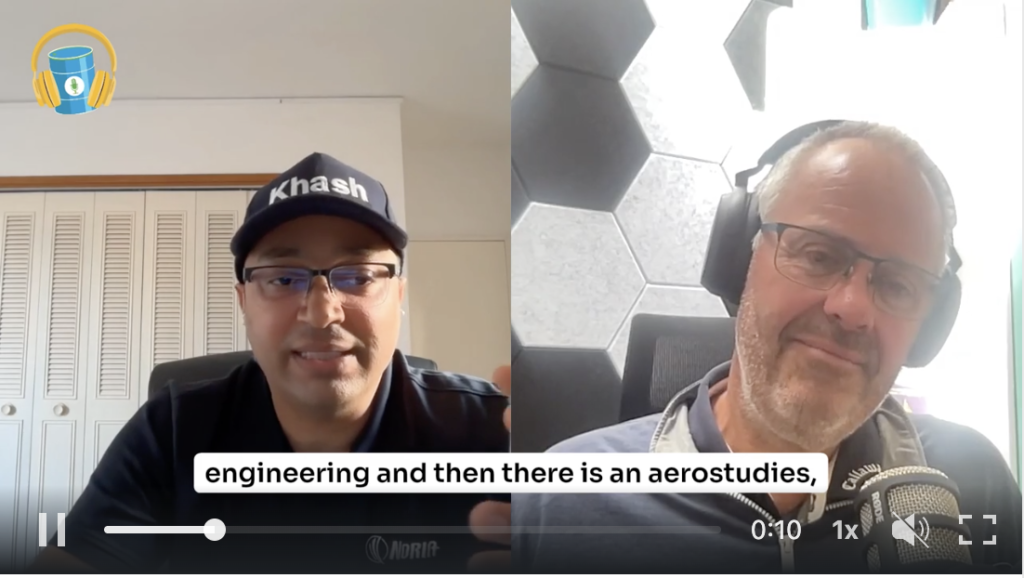
The lubricants industry is often discussed through products, specifications and performance claims. Yet behind every technical development is a person learning, questioning, experimenting and trying to solve a real problem. In a recent episode of Beyond the Blend, host Steve Knapp spoke with Kash, a machinery lubrication specialist, trainer and consultant who is beginning a new chapter with Noria Corporation after five years with EPT Clean Oil.
Their conversation explored Kash’s journey from Tehran to an international engineering career, the mentors who helped shape him and his belief that lubrication should be treated as an essential part of asset reliability. It also raised wider questions about technical selling, professional credibility, knowledge sharing and the responsibility experienced people have to help the next generation.
From Tehran to an international engineering career
An early introduction to heavy industry
Kash’s career began with mechanical engineering studies in Iran, followed by experience across cement, mining and steel. These were environments where engineering was not an abstract idea. Equipment performance, component failure and maintenance decisions had visible operational consequences. That early exposure helped him understand how engineering disciplines connect in practice. A
bearing, lubricant or filtration problem cannot always be separated neatly from the wider system in which it operates. Working around large industrial equipment also gave him an appreciation for the realities faced by maintenance teams, where downtime, production pressure and limited resources often shape decisions as much as the technical evidence.
Becoming one of SKF’s youngest sales engineers
Joining SKF represented an important step in Kash’s development. As one of the
company’s youngest sales engineers, he entered an environment containing people
with far more experience than him. Rather than seeing that gap as a reason to
retreat, he treated it as an opportunity to learn. His early commercial success
eventually led to a move to Oman, expanding both the geographical and professional
scope of his work. It was a formative experience because he was required to
combine technical knowledge with communication, commercial awareness and
personal confidence. Knowing the engineering was important, but helping customers
apply it effectively became just as important.
Learning across countries and cultures
Kash’s work later took him across Oman, the UAE, the wider Middle East, Africa and
India. Each country brought different industrial environments, business cultures and ways of approaching technical problems. This international exposure made him more adaptable, both as an engineer and as a communicator. A technically correct explanation is not necessarily an effective explanation if it ignores the audience, their experience or their working culture. Kash learned to observe how people communicated, made decisions and built trust. These experiences reinforced a central theme from his conversation with Steve: expertise is most valuable when it can travel across organisational, professional and cultural boundaries.
Curiosity, preparation and practical learning
Preparing when experience is limited
Kash openly acknowledged that he did not have every answer when he interviewed for SKF. What he did have was a willingness to prepare extensively. That distinction matters. Early in a career, it is impossible to possess decades of experience, but it is possible to demonstrate curiosity, effort and the ability to learn. Preparation helped Kash show that his lack of experience did not mean a lack of potential. The same lesson applies to modern technical and commercial professionals. Buyers do not expect a salesperson to know absolutely everything, but they do expect them to arrive informed, understand the customer’s situation and take responsibility for finding credible answers. This is especially relevant when 83% of lubricant buyers say sellers arrive less prepared than they are. Preparation is not an administrative task. It is one of the earliest ways a professional demonstrates respect.
Turning theory into something useful Technical theory gave Kash an essential foundation, but he repeatedly returned to the importance of applying it in the field. A specification, formula or textbook principle becomes meaningful when it helps someone diagnose a problem, improve reliability or avoid an unnecessary failure. Practical application also reveals complexity that theory alone may not show. Operating conditions vary, systems become contaminated and maintenance practices are rarely perfect. Learning therefore continues after the qualification is completed. For Kash, the strongest knowledge is created when technical understanding is tested against real equipment, real working conditions and the experience of the people responsible for keeping that equipment running.
Reading, questioning and investigating
Kash described continual learning as an active process. It involves reading, asking questions and investigating what is really happening rather than settling for the most convenient explanation. This curiosity helped him build credibility with colleagues who had considerably more experience. It also encouraged him to look beyond symptoms and examine the interaction between lubricant condition, machinery health and maintenance behaviour. Curiosity is particularly important in technical sales because the first problem described by a customer is not always the underlying problem. Good professionals resist the urge to present a quick answer. They investigate, test their assumptions and remain open to the possibility that the evidence may lead somewhere unexpected.
Learning through real industrial problems
Solving practical problems became central to the way Kash developed his knowledge and, eventually, the way he taught others. Real industrial environments rarely offer perfectly isolated problems. A machine may be affected by contamination, incorrect lubricant selection, poor storage, unsuitable relubrication practices or an underlying mechanical defect. Finding the cause requires a combination of knowledge, observation and disciplined questioning. These experiences create lessons that are difficult to obtain through theory alone. They also give technical educators better examples to use when teaching. Rather than
explaining principles in isolation, Kash can connect them to consequences that engineers and technicians recognise from their own working lives.
Mentors, opportunity and supporting younger professionals
Experienced colleagues who shared their knowledge
Kash spoke warmly about experienced SKF colleagues who recognised his potential and allowed him to become involved in meaningful projects. They did more than answer occasional questions. They shared access, context and responsibility. This gave him opportunities to see how experienced professionals assessed problems, communicated with customers and made decisions. Knowledge transfer is strongest when less experienced people can participate rather than merely observe from a distance. Organisations sometimes talk about developing talent while keeping their most valuable work within a small circle of senior specialists. Kash’s experience shows how much can happen when experienced professionals deliberately open that circle and allow someone younger to contribute.
Giving younger people room to demonstrate ability
One of Kash’s stronger observations was that younger professionals should not have to wait for senior colleagues to retire before being given meaningful opportunities. Experience deserves respect, but experience should also create a platform for others. Developing the next generation means trusting people with real work while appropriate support is available. It involves allowing them to ask questions, make judgements and gradually accept responsibility. This is not about replacing experienced professionals. It is about extending their knowledge and preventing capability from becoming concentrated in a few individuals. For an industry concerned about skills shortages, structured opportunity may be just as important as recruitment.
The influence of Tommy John
Kash described Tommy John as his “technical and commercial father”, reflecting the depth of Tommy’s influence on his career. Tommy combined knowledge of reliability with entrepreneurship and an exceptional commitment to helping customers. His availability made a particular impression. Technical expertise has greater value when people can access it at the point of need. Kash learned that professional credibility is built not only through what somebody knows, but also through whether they can be trusted to respond, support and stay involved when a problem becomes difficult. Tommy’s example helped Kash see technical competence and customer commitment as connected qualities rather than separate parts of the job.
When a competitor becomes a collaborator
The relationship with Tommy also challenged the assumption that competitors must remain at a distance. Someone who might initially have been seen as a commercial rival became a trusted collaborator, mentor and role model. Specialist industries are often smaller and more connected than they appear, and today’s competitor may become tomorrow’s partner, colleague or source of expertise. Relationships can therefore create value that extends beyond a single transaction or employer. Kash’s story demonstrates what becomes possible when people share knowledge generously and recognise complementary strengths. Healthy competition can still exist, but it does not have to prevent professional respect, cooperation or friendship.
Lubrication as an asset, not simply a consumable
Choosing to specialise in lubrication
Kash could have continued developing his expertise in rolling bearings, but he became increasingly drawn towards lubrication. Part of the attraction was the scale of the opportunity. Lubrication affects the performance and life of countless industrial assets, yet it does not always receive attention proportionate to its importance. Specialising allowed him to explore the relationship between lubricants, machinery health, contamination and reliability in greater depth. It also placed him in a field where relatively modest changes in practice could produce meaningful operational improvements. The decision was therefore not simply about choosing a technical niche. It was about focusing on an area with considerable potential to prevent problems.
The imbalance between importance and investment
Lubrication often represents a relatively small part of the overall maintenance budget. Unfortunately, that can lead organisations to treat it as a minor purchasing category rather than a reliability discipline. Attention frequently goes to the price of the lubricant while the much larger costs associated with downtime, component damage, labour and lost production remain less visible. Kash’s argument is that the value of lubrication should be considered through its effect on the asset. A decision that saves a small amount on product may create a much greater cost elsewhere. Better conversations therefore begin with equipment performance and operational risk, not simply cost per litre.
From replacing oil to understanding its condition
A traditional maintenance approach may involve replacing oil or grease at a predetermined interval without closely examining its remaining condition. Kash encourages a more informed approach. By monitoring the lubricant, organisations can understand degradation, contamination and changes within the machine. This evidence can help determine whether the lubricant is still fit for service, whether corrective action is needed or whether the replacement interval should change. The objective is not to keep oil in service indefinitely. It is to make decisions based on evidence rather than habit. Done properly, condition-based thinking can extend lubricant life, reduce waste and reveal developing problems before they become failures.
Interpreting oil analysis properly
Kash compared oil analysis with medical testing. A test report contains information, but information alone does not provide a diagnosis. Results need to be interpreted by someone who understands the equipment, operating conditions, lubricant and trends over time. A single figure may appear unusual without necessarily indicating an urgent problem. Equally, a result inside a general limit may still be significant when compared with that particular machine’s history. Effective oil analysis therefore requires context and qualified judgement. Laboratories provide valuable evidence, but the organisation still needs someone capable of translating that evidence into action. Otherwise, reports risk being collected, filed and forgotten.
Cause, consequence or both?
When a lubricant and a machine both show signs of deterioration, an important question follows: did the lubricant contribute to the mechanical problem, or did the failing machine damage the lubricant? The answer is not always obvious. Contamination, oxidation or unsuitable viscosity may accelerate wear, but abnormal operating temperatures or component failure may also cause the oil to degrade. Effective diagnosis requires the evidence to be considered as a connected system. Treating every poor oil result as a lubricant problem can lead to the wrong intervention. Equally, focusing only on the mechanical component may leave the root cause in place and allow the failure to repeat.
Moving from selling products to advising customers
Selling grease through application knowledge
Kash’s early commercial success with SKF grease did not come simply from describing the product. He used application knowledge, testing, sampling and customer education to help people understand why a particular solution was appropriate. This created a more credible commercial conversation because the recommendation was connected to the customer’s equipment and operating conditions. It also reduced some of the uncertainty associated with changing products. Customers could see evidence, ask questions and build confidence before committing. The lesson extends across technical selling: product knowledge matters,
but its value depends on whether the seller can connect that knowledge to the customer’s application and desired outcome.
Looking beyond lubricant price
Lubricant suppliers can become heavily focused on the part of the budget they directly influence. That is understandable, but it can narrow the conversation. The customer is not ultimately trying to purchase oil or grease. They are trying to keep equipment operating, control costs, protect output and reduce risk. A lubricant may account for a small percentage of maintenance expenditure while influencing assets worth millions. Sellers who remain focused on price and volume can miss the wider commercial and operational value available to the customer. Moving the discussion towards equipment life, productivity and avoided failure creates a more useful basis for both recommendation and investment. This reflects the wider shift from lubricant volume towards customer value. Product specifications remain important, but they are rarely enough to differentiate a supplier on their own.
Helping customers connect fragmented expertise
A maintenance professional may receive different advice from lubricant manufacturers, OEMs, filtration specialists, laboratories and independent consultants. Each party brings valid expertise, but each may also view the problem through its own area of interest. The customer is then expected to assemble those perspectives into a coherent decision. Kash sees a need for professionals who can connect the pieces. This means understanding the lubricant, the machine, contamination control, analysis data and the customer’s operational priorities. The
most valuable adviser may not be the person with the largest catalogue. It may be the person who can help the customer see the complete picture.
Becoming an independent adviser
Kash’s decision to move away from directly selling solutions was driven by a desire to offer more independent guidance. When an adviser is tied to a particular product, customers may reasonably wonder whether the recommendation is being shaped by the application or the catalogue. Independence does not make someone automatically correct, but it can create more room to compare options and challenge assumptions. For Kash, the role is about helping end users make better-informed decisions rather than steering them towards a predetermined answer. That requires honesty about uncertainty, the ability to explain trade-offs and the confidence to recommend no change when the evidence does not justify one.
Performance in the application
Data sheets allow products to be compared, but they cannot capture every operating
environment. Temperature, contamination, load, speed, storage, application method
and maintenance behaviour can all influence performance. Kash therefore emphasises what happens when the lubricant enters the real application. Two technically similar products may behave differently under particular conditions, while a theoretically superior lubricant can still fail if it is stored or applied badly. Good product selection combines specification with application understanding. It also continues after the sale. Monitoring performance, gathering feedback and reviewing results help determine whether the recommendation is delivering the intended outcome rather than merely satisfying the initial technical requirement.
Qualifications, credibility and professional confidence
Certification as a licence to begin
Kash described professional certification as similar to a driving licence. It demonstrates that somebody has reached a necessary standard, but it does not make them a complete expert in every situation. This is a useful way to understand technical qualifications. Certification creates structure, verifies foundational knowledge and gives employers and customers a degree of confidence. However, competence continues to develop through application, reflection and exposure to different problems. The danger comes when someone sees passing an examination as the end of learning. In a field as varied as machinery lubrication, qualifications should provide the foundation for professional growth rather than a final declaration of mastery.
Combining qualifications with field experience
Experience without structured knowledge can allow poor assumptions to continue unchallenged. Knowledge without experience can make complex problems appear cleaner than they are. Kash’s career illustrates the value of combining both. Qualifications helped him organise technical principles and understand the relationships between different elements of lubrication and reliability. Fieldwork showed him how those principles behave under pressure, imperfect maintenance practices and changing operating conditions. Credibility comes from being able to move between the two. A strong professional can explain the theory, recognise where reality differs from the textbook and use evidence to reach a practical recommendation that the customer can implement.
Knowledge as a source of confidence
As Kash’s knowledge grew, so did his willingness to take responsibility, present technical solutions and teach other people. This was not confidence based on performance or status. It came from preparation, experience and the ability to explain why he had reached a conclusion. That kind of confidence is particularly important in technical environments, where professionals may need to challenge established practice or communicate an uncomfortable finding. It also allows someone to say “I don’t know” without losing credibility, because they have a reliable process for investigating the answer. Genuine confidence is not certainty about everything. It is confidence in one’s ability to learn, reason and respond responsibly.
The Machinery Lubrication Engineer qualification
Completing the Machinery Lubrication Engineer qualification marked an important stage in Kash’s professional development. It broadened the focus from individual lubricant decisions towards the way lubrication supports reliability and asset-management objectives. This wider perspective matters because good lubrication practice cannot operate in isolation. It must connect with maintenance strategy, risk, production demands and the economics of the asset. The qualification helped Kash place technical decisions inside that larger system. It also strengthened his ability to speak with different stakeholders, from technicians dealing with daily lubrication tasks to leaders concerned with reliability performance, investment priorities and the long-term return from maintenance improvements.
Experience, knowledge and relationships
Kash summarised lasting professional success through three connected elements: experience, knowledge and relationships. Knowledge gives someone the technical foundation to understand a problem. Experience develops judgement and the ability to recognise patterns. Relationships create trust, access and opportunities to learn from others. Weakness in any one area can limit the other two. A knowledgeable person who cannot build trust may struggle to influence action. A well-connected person without sufficient competence may eventually lose credibility. An experienced professional who stops learning risks relying on outdated assumptions. Kash’s career shows how the three can reinforce one another across different roles, countries and stages of professional life.
Making complex technical knowledge understandable
Translating chemistry into engineering decisions
Lubricants are often developed through highly specialised chemistry, but many of the people responsible for using them come from mechanical or electrical engineering backgrounds. This creates a translation challenge. The chemistry matters, but it must be connected to practical questions about equipment, performance and risk. Kash sees part of his role as building that bridge. Rather than removing the science, he makes it usable. This means explaining why a property matters, what effect it may have in the application and what the end user should observe. Expertise becomes more valuable when it helps another person make a confident decision rather than leaving them impressed but uncertain.
Adapting the explanation to the audience
A technician, reliability engineer and senior decision-maker may all need to understand the same lubrication issue, but they are unlikely to need the same explanation. The technician may want clear actions and observable signs. The engineer may need technical evidence and diagnostic reasoning. The decision-maker may be concerned with operational exposure, cost and implementation. Kash adapts his communication accordingly. This is not about withholding information or oversimplifying it. It is about recognising what each person needs in order to act. Communication fails when the speaker delivers everything they know rather than what the audience needs to understand at that moment.
Using familiar comparisons
Kash uses everyday examples such as honey, water and a sponge to explain viscosity, grease consistency and thickener behaviour. Familiar comparisons give learners a mental model they can recall after the training has finished. They also reduce the intimidation that can surround technical subjects. An analogy will never reproduce every scientific detail, so it must be used carefully, but it can provide a useful starting point. Once the learner understands the basic relationship, more technical detail can be added. The skill is not simply finding a clever metaphor. It is choosing an example that makes the concept more accessible without creating a misleading understanding.
Removing unnecessary complexity
Technical professionals can sometimes use complexity as evidence of expertise. Kash takes the opposite view. If an explanation leaves the customer unable to make a decision, it has not fully served its purpose. Clear communication requires deep knowledge because the speaker must understand which details are essential and which can wait. Simplicity should not mean ignoring uncertainty or reducing everything to a slogan. It means organising information so the audience can follow the reasoning. In technical sales and training, this can be the difference between knowledge being admired and knowledge being applied. Customers benefit when specialists make difficult subjects easier to navigate.
Understanding the person receiving the message
Kash’s approach begins with what the customer may be thinking, feeling and experiencing. A maintenance professional facing repeated failures, production pressure or scrutiny from management does not need a specialist trying to prove they are the cleverest person in the room. They need someone who understands the practical and human context of the problem. Listening helps reveal what has already been attempted, where uncertainty remains and what may prevent a recommendation from being implemented. Plan Grow Do’s Buyer Revolution research reaches a similar conclusion: buyers value sellers who listen, prepare and contribute something genuinely useful.
Culture, communication and working across borders
Learning from different nationalities
Working with people from around 20 nationalities taught Kash that one communication style will not work everywhere. Language proficiency, workplace hierarchy, attitudes to questioning and expectations of a trainer can vary significantly. A method that encourages discussion in one group may make another group uncomfortable. Effective cross-cultural communication therefore requires observation and flexibility. Kash learned to adjust his language, examples and delivery without changing the technical integrity of the message. This is a valuable capability in an international industry where products may be standardised but the people using, buying and maintaining them bring very different experiences and expectations.
Understanding different approaches to work
Cultural awareness extends beyond language. Different organisations and countries
may approach time, authority, risk, relationships and decision-making in distinct ways. A salesperson or technical specialist who assumes their own approach is universal can misread the customer. Kash’s international career helped him recognise these differences and adapt without making simplistic judgements. The objective is not to memorise a set of national stereotypes. It is to remain curious about how a particular customer operates. Asking respectful questions and watching how decisions are made can reveal more than relying on assumptions about what a buyer ought to value or how quickly they should act.
Credibility on the factory floor
Technical credibility is strengthened when customers believe the person advising them understands their working environment. Life on the factory floor includes production pressure, limited access to equipment, safety requirements and maintenance tasks competing for attention. A recommendation that ignores these realities may be technically sound but practically impossible. Kash’s industrial background allows him to connect with the people expected to carry out the work. He can recognise the difference between an ideal programme and one that can realistically be implemented. Customers are more likely to trust advice when it respects their constraints and involves them in shaping a workable solution.
Looking beyond sales figures
Revenue and volume are important measures, but they do not tell the whole story of
a customer relationship. Kash encourages businesses to consider whether the customer is better informed, more confident and receiving lasting value. A large initial order can hide poor product fit or weak support, while a smaller opportunity may develop into a valuable long-term relationship through education and reliability improvement. Commercial success should therefore include the effect the supplier has on the customer. Are problems being prevented? Are people learning? Is the relationship becoming easier and more useful? These questions create a richer view of account value than sales figures alone.
Sharing knowledge and building global communities
Beginning to share consistently on LinkedIn
After leaving SKF in 2018, Kash began sharing technical knowledge more consistently on LinkedIn. This allowed his experience to reach people who might never attend one of his courses or work with him directly. Consistent sharing also created a public record of how he thought about lubrication and reliability. Rather than simply telling people he possessed expertise, he demonstrated it by explaining concepts and responding to questions. For specialists in any technical B2B market, this is an important distinction. Useful content can help buyers and peers learn before a commercial conversation ever takes place, building familiarity and trust over time.
Losing and rebuilding an audience
Kash’s original LinkedIn presence grew to around 55,000 followers before the account was lost in 2025. Losing an audience built over several years would be a serious setback for anyone. His response, however, was to begin rebuilding while learning more carefully how to operate within LinkedIn’s rules. The experience reinforces an important point about professional visibility: an audience is valuable, but the underlying expertise, relationships and commitment to sharing matter more than a particular account. Platforms can change and access can disappear. A genuine professional reputation is more resilient because people remember the
value they received and can reconnect elsewhere.
Specialist WhatsApp communities
Kash also created around 15 specialist WhatsApp groups covering subjects including lubrication, bearing failure analysis and rotating equipment. These communities connect thousands of professionals who can exchange questions, experiences and technical information. Their value comes partly from their immediacy. A person facing an unfamiliar problem may be able to reach others who have seen something similar. Such groups require careful management to remain useful, but they show how informal professional communities can complement formal training. Knowledge does not need to flow only from an appointed expert to a learner. It can develop through many practitioners comparing evidence and learning together.
The wider value of knowledge sharing
Sharing knowledge produces benefits beyond individual visibility. It gives professionals access to different experiences, emerging technology and alternative ways of solving problems. It can create relationships across countries and organisations that later lead to collaboration, employment or commercial opportunities. Most importantly, it helps useful information travel further. This aligns with the modern sales principle that expertise should be visible and accessible before the buyer asks for a meeting. Content that supports a B2B sales conversation does not need to function as a direct sales pitch. Its first job can simply be to answer a real question well.
Fatherhood, teaching and legacy
Seeing education differently as a father
Becoming a father changed the way Kash thought about teaching and the knowledge he might leave behind. Professional learning was no longer only about developing his own career or helping current customers. It became connected to example, legacy and what the next generation might inherit. Parenthood can make long-term questions feel more immediate. What knowledge is worth passing on? What behaviours should a child see? What kind of world are they being prepared to enter? For Kash, these questions strengthened his commitment to learning and sharing. They also brought a deeply personal dimension to work that could otherwise be viewed primarily through technical achievements.
Introducing Armand to engineering
Kash wants to introduce his son, Armand, to lubrication and engineering concepts from an early age. This does not mean forcing a particular career upon him. It means creating familiarity with curiosity, systems and practical problem-solving. Children often encounter engineering through the objects and technologies around them long before they learn its formal language. Explaining how things move, wear, fail or remain reliable can help make the subject approachable. Kash’s enthusiasm also demonstrates something important about vocational legacy: the most memorable lessons may come not from formal instruction, but from seeing a parent take genuine interest in understanding and improving the world around them.
Preparing children for a changing world
Children growing up with AI, YouTube and constant access to information will face a different learning environment from the generation before them. Kash believes they need to be prepared earlier for both the opportunities and challenges this creates. Information will be easy to find, but judgement, curiosity and the ability to test what is true may become even more important. Technical knowledge will continue to evolve, so the capacity to learn may matter as much as any particular fact. The task for parents and educators is not simply to provide answers. It is to help young people question, explore and use powerful tools responsibly.
The most important project
Despite an international career and significant technical achievements, Kash described raising and educating his son as the most important project of his life. The word “project” is revealing, not because fatherhood can be managed like an engineering programme, but because it expresses intention and responsibility. Professional success can create expertise, recognition and opportunities, yet personal legacy is often built through the time, values and confidence invested in another person. This part of the conversation also brought the wider themes together. Curiosity, patience, communication and the willingness to share knowledge
are valuable in engineering, teaching, mentoring and parenting alike.
A wider ambition for the lubrication profession
Recognising the earliest signs of failure
Kash believes lubricant-related changes often emerge before the vibration or mechanical symptoms that receive greater attention. Oil condition, contamination and wear debris can provide early evidence that something inside the system is changing. If organisations are monitoring these indicators and interpreting them properly, they may have an opportunity to intervene before damage becomes severe. This does not reduce the importance of vibration analysis or other condition- monitoring disciplines. Instead, it supports a more integrated approach. Reliability improves when different sources of evidence are combined rather than competing for status, allowing maintenance teams to build a clearer view of developing risk.
Developing more lubrication engineers
The industry needs more dedicated lubrication engineers who can connect daily lubrication practices with the long-term health of assets. Too often, responsibility is spread across people who have many other priorities, leaving no one with ownership of the complete programme. A specialist can help improve storage, handling, application, contamination control, analysis and decision-making. They can also build internal capability so that good practice does not depend entirely on outside support. Kash’s ambition is not about creating job titles for their own sake. It is about recognising that a discipline with such a significant influence on reliability deserves clear accountability and appropriate expertise.
Connecting vibration and lubrication knowledge
Vibration specialists and condition-monitoring professionals are often well placed to identify developing machine problems, but Kash argues that stronger lubrication knowledge would make their diagnosis more complete. A vibration pattern may indicate a mechanical issue, while lubricant analysis can offer evidence about wear, contamination or operating conditions. Professionals who understand both perspectives are better equipped to distinguish symptoms from causes. This interdisciplinary knowledge can also improve communication between technical teams. Rather than each discipline producing a separate report, the organisation can combine evidence into a shared understanding of the asset and agree the most appropriate action.
Moving lubrication towards the beginning
Lubrication is sometimes addressed only after a failure, complaint or unacceptable
test result. Kash wants it placed closer to the beginning of reliability thinking. This means considering lubricant selection, storage, handling, filtration, application and monitoring as part of the asset strategy rather than a collection of reactive tasks. The change is as much cultural as technical. Organisations must stop seeing lubrication only as a low-cost consumable and begin recognising its influence on equipment life and performance. When lubrication is considered early, teams have more opportunity to prevent problems. When it is considered late, they are often left investigating damage that has already occurred.
Knowledge becomes valuable when it helps somebody act
Kash’s story is about lubrication, but it is also about something wider. It shows what can happen when curiosity is supported by opportunity, when experienced people choose to share what they know and when technical expertise is made understandable enough to use.
His career has moved through engineering, sales, consulting, training and community building, yet the underlying purpose has remained remarkably consistent: understand the real problem, connect the available evidence and help people make a better decision.
For lubricant suppliers, maintenance professionals and technical salespeople, the invitation is clear. Look beyond the immediate product. Understand the application. Prepare properly. Ask better questions. Share knowledge freely and remember that expertise is not demonstrated by making a subject appear difficult. It is demonstrated by helping someone else understand what to do next.
This article draws upon Steve Knapp’s conversation with Kash on Beyond the Blend,
the podcast exploring the people, ideas and experiences shaping the lubricants industry.
Subscribe to Beyond the Blend to hear more honest conversations with the people
behind the products, businesses and technical developments influencing the sector.
Spotify: https://lnkd.in/e36Rri9B
Apple: https://lnkd.in/ecu_uTiq
YouTube: https://lnkd.in/ephDY5xA