Published 17 August 2026

Share this article
It's Never Been About the Sales Funnel. It's About Opportunity Flow.
Over the last few weeks, I’ve shared four articles exploring what many people would describe as the sales funnel. We started by looking at attracting the right buyers, then explored why sales funnels become blocked, why opportunities lose momentum and, most recently, why forecasting is really a measure of business confidence rather than simply a prediction of revenue.
As I reflected on those articles, I realised they all had one thing in common. None of them were really about sales funnels. They were about opportunities and, more specifically, how opportunities should flow through a business from first contact to successful delivery.
For years we’ve been conditioned to think about sales funnels as something we need to fill. We celebrate lead generation, monitor pipeline value and report conversion rates as though the objective is simply to have more opportunities than we had last month.
Yet a full funnel doesn’t guarantee growth any more than a full motorway guarantees traffic will reach its destination. In both cases, the real measure of success isn’t volume; it’s flow. Healthy businesses don’t simply generate opportunities. They create an environment where opportunities continue moving forwards because every stage of the buying journey adds value for both buyer and supplier.
That thought has become even more relevant through our Buyer Revolution research. After analysing more than 25,000 buyer data points, one message has consistently emerged. Buyers are becoming more informed, more selective and more intentional in how they engage suppliers.
Ninety-three per cent begin their buying journey using search engines, while almost 78% already have a good understanding of what they are likely to buy before speaking to Sales. In other words, opportunities don’t begin when a salesperson makes contact. They begin much earlier, often long before the supplier
even knows they exist.
That was the focus of the first article in this series. If buyers are educating themselves, then our responsibility is to ensure they find us for the right reasons. Businesses that position themselves around the problems they solve, rather than simply the products they supply, naturally attract better opportunities.
The quality of the pipeline is increasingly determined before the first conversation ever takes place because buyers are already deciding who appears relevant and who doesn’t.
The Story of Two Sales Funnels

The second article built on that idea by exploring qualification. Attracting opportunities is only valuable if they deserve to remain in the pipeline. I’ve often said that suspects never buy, and I believe that principle has never been more relevant than it is today.
Every weak opportunity consumes time, attention and resources that could have been invested elsewhere. Good qualification isn’t about excluding people; it’s about establishing whether there is a genuine opportunity to create value. It protects the buyer’s time as much as it protects the seller’s.
Why Buyers Stall in the Middle of Your Sales Funnel
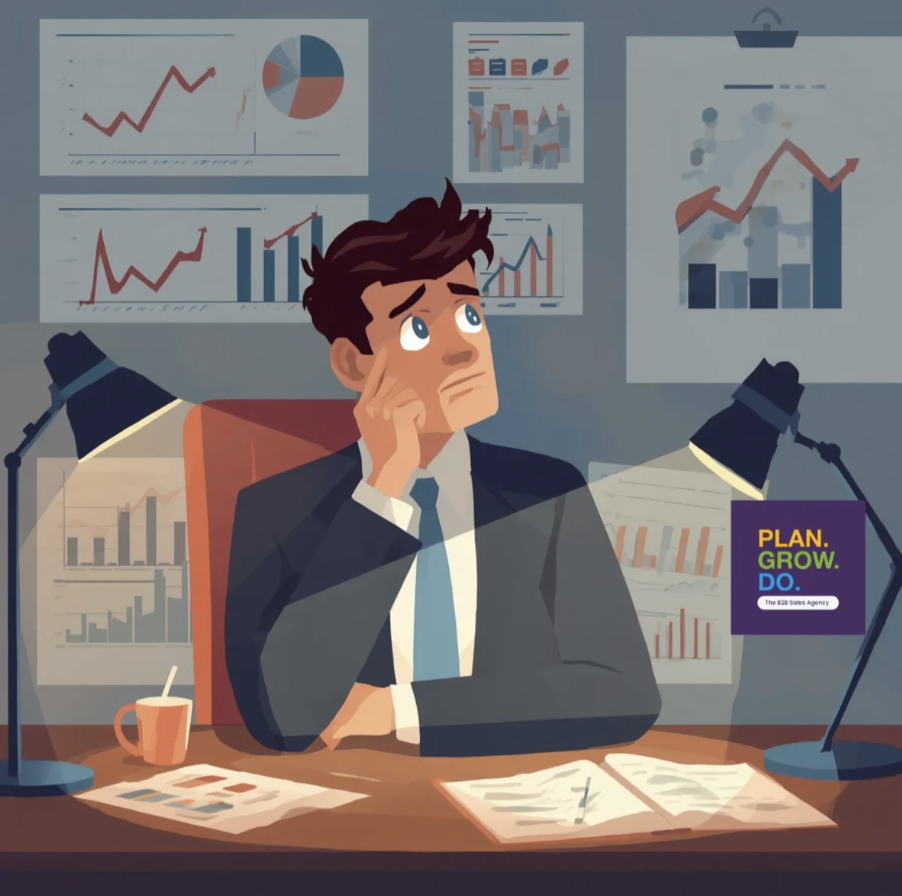
Once an opportunity has earned its place, the challenge changes again. The third article explored why opportunities stall and concluded that too many salespeople confuse follow-up with progress.
Buyers don’t need another email asking whether they’ve had time to review a proposal. They need conversations that reduce uncertainty, answer the next important question and help them make the next meaningful decision. Momentum isn’t maintained by repeatedly checking in. It is maintained by continually adding value and ensuring that every interaction moves the buying journey forwards.
Why Sales Funnels Become Blocked

The fourth article looked beyond the Sales function itself. Every opportunity that progresses through the pipeline has implications for Production, Supply Chain, Customer Service, Finance and Leadership. Forecasting therefore isn’t simply about predicting revenue.
It is about giving the wider business enough confidence to prepare. When opportunities are shared honestly and early, departments can plan rather than react. When they aren’t, the business finds itself continually firefighting, and it is almost always the customer who experiences the consequences through missed expectations, changing lead times or delayed delivery.
The Biggest Cost of a Poor Sales Forecast Isn't Missing the Number

Viewed individually, each of these articles addresses a different challenge within the sales process. Viewed together, however, they describe something much bigger.
They describe what effective opportunity management actually looks like and why it has become one of the defining characteristics of high-performing commercial organisations.
This is where I believe many businesses unintentionally limit themselves. They become excellent at managing sales activity but far less effective at managing opportunities. Calls are counted, meetings are measured, proposals are tracked and CRM systems become increasingly sophisticated. Whilst those metrics undoubtedly have value, buyers never experience our internal activity.
They experience the quality of the journey we create for them. They remember whether we understood their business, whether we respected their time, whether we challenged their thinking in a constructive way and whether we ultimately delivered what we promised. From a buyer’s perspective, opportunity management has very little to do with CRM stages and everything to do with confidence.
Interestingly, that is exactly what our Buyer Revolution research tells us. Buyers consistently told us they value application knowledge, industry insight and validation of the decisions they are already making far more than another product presentation.
They also expect suppliers to respond promptly, communicate personally and continue adding value after the order has been placed. In many ways, buyers are describing excellent opportunity management without ever using those words.
Perhaps this is also why I believe methodologies such as SPANCOP are often misunderstood. They are frequently described as sales processes, yet I see them as opportunity management frameworks. Every stage exists to answer one simple question: has confidence increased enough for this opportunity to move forward?
If the answer is no, then the opportunity hasn’t progressed regardless of how many meetings have taken place or how much activity has been recorded. If the answer is yes, then both buyer and supplier move forwards with greater confidence because value has been created for both parties.
Looking back, I don’t think this series has really been about sales funnels at all. It has been about helping opportunities move from curiosity to confidence, from confidence to commitment and ultimately from commitment to successful delivery.
Each article has explored one part of that journey, but together they describe something much more important: an organisation that understands how to help buyers buy, how to prepare itself to deliver and how to create value at every stage in between. Perhaps that's the biggest lesson the Buyer Revolution has taught me.
Sustainable growth doesn’t come from filling sales funnels. It comes from managing opportunities so effectively that customers experience confidence long before they ever receive the product or service they purchased. It’s About Opportunity Flow