Share this article
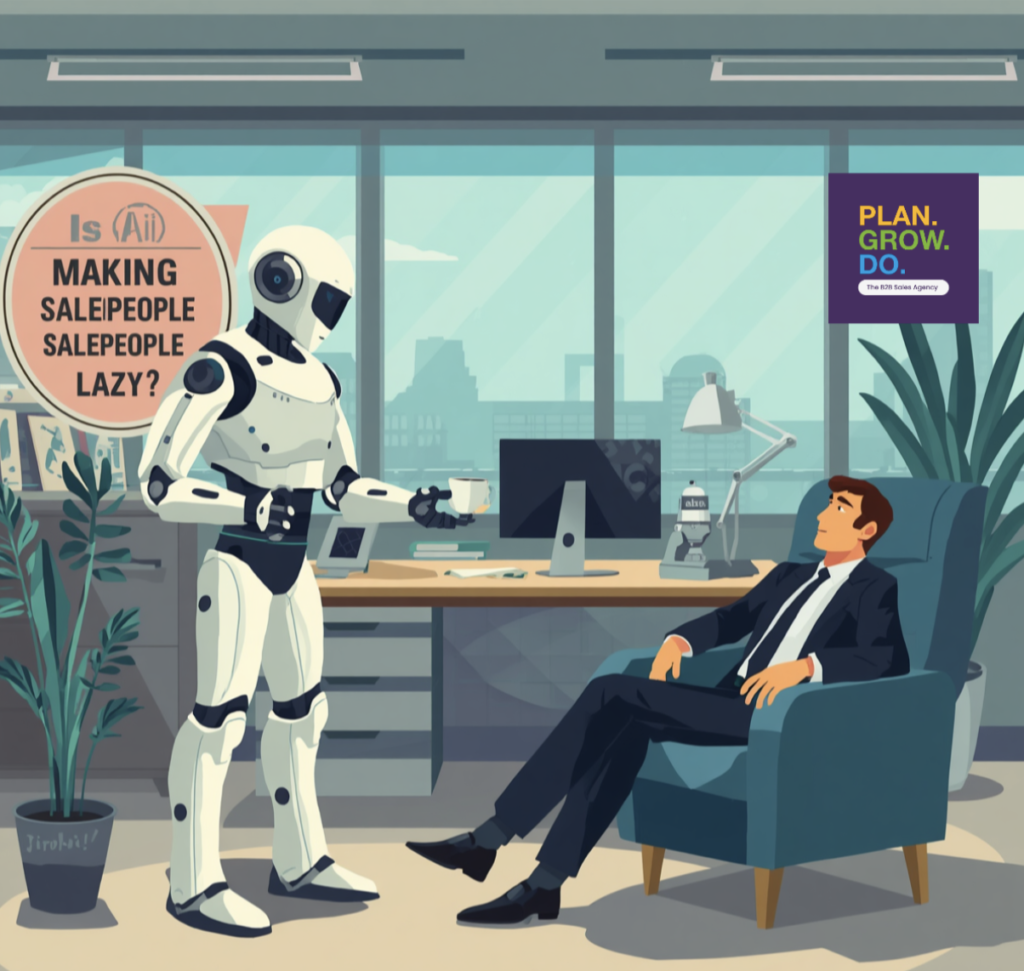
“Is AI Making Salespeople Lazy?”
That question came up recently during a demo of our Always On platform with the owner of a lubricants business.
It was a good question because underneath it sat a bigger concern around accountability, buyer expectations, sales behaviour, and whether AI improves commercial teams or slowly weakens them.
My answer was simple.
No.
At least not the salespeople who understand how to use AI properly.
In fact, I think AI is exposing the gap between salespeople who genuinely create value and those who have relied on activity, repetition, or outdated selling habits for too long.
What made the conversation interesting was that we were not discussing AI in theory. We were walking through what actually happens inside many B2B businesses when an enquiry arrives. A web form lands. A WhatsApp message comes in after hours. An email hits a shared inbox. Someone sees it. Someone intends to respond. Someone assumes somebody else is handling it. Time passes. Momentum disappears. The buyer moves on.
The reality is most businesses have far less visibility of this than they think. And yet the Buyer Revolution research has been warning us about this for years. 79% of buyers told us speed of response significantly shapes trust.
76% said they are less likely to engage when suppliers respond slowly. 72% said they want speed with substance, not just fast replies with no value behind them.
Perhaps the most revealing insight of all is this: More than 80% of buyers suggested they often arrive more prepared than the salesperson they are meeting.
Think about that. The buyer has already researched. Compared options. Read technical information. Spoken internally. Defined risks. Built shortlists. Watched videos. Asked peers. Many have already formed opinions before the salesperson properly enters the conversation.
That changes the role of selling completely.
The modern seller is no longer the gatekeeper of information. Buyers already have access to information. What they increasingly value is relevance, context, operational understanding, and confidence that the salesperson understands their world.
Interestingly, our recent AI Readiness in Lubricant Sales survey, completed in collaboration with United Kingdom Lubricants Association (UKLA) Ltd and ILMA (Independent Lubricant Manufacturers Association) contributors, reinforces this perfectly.
85% of contributors said they are already using AI either occasionally or regularly, but the dominant use cases today are still prospect research and drafting emails.
That tells us something important.
The first wave of AI adoption is helping activity and efficiency more than commercial
effectiveness. The sector is largely using AI to help write the email… rather than improve the thinking behind the email.
And that is where I think the real opportunity sits. Because contributors to the survey also highlighted that the deeper commercial opportunities for AI sit in qualification, negotiation preparation, value proposition
development, quoting accuracy, and follow-up consistency. That is a completely different level of sales impact.
It moves AI away from being a productivity shortcut and towards becoming part of a commercial operating rhythm. The survey also exposed another fascinating tension. 72% of contributors believe AI will significantly influence lubricant sales over the next three years, yet organisational readiness
remains low.
In other words, belief is ahead of integration. Businesses can see where this is going, but many are still trying to work out how AI fits into real sales behaviour, workflow, accountability, and customer interaction.
That matters because AI does not replace the human side of selling. It does not replace trust. It does not replace curiosity. It does not replace commercial judgement. It does not replace operational understanding. It does not replace relationship building. If anything, those skills become more important because buyers can now detect shallow engagement faster than ever before.
And perhaps this is where the discussion around “lazy salespeople” misses the point.
Good salespeople are not using AI to avoid work. They are using it to become faster, better prepared, more responsive, and more consistent.
They are using it to reduce friction. To qualify enquiries quicker. To prepare for meetings better. To improve follow-up. To capture insight properly. To remove admin drag. To create more time for meaningful customer interaction.
In fact, one of the most encouraging findings from the AI Readiness survey was that contributors said if AI created 20% more time, they would reinvest it into prospecting, customer interaction, stronger
pipeline building, strategic thinking, and customer value creation.
That does not sound like laziness. That sounds like a sector trying to work out how to become more effective.
Which is exactly why we built Always On. Not to replace salespeople, but to strengthen the space between buyer interest and sales action. Always On captures inbound demand early, qualifies enquiries in real
time, routes opportunities instantly, prepares sales teams with context before conversations begin, and closes the loop by feeding insight back into sales and marketing activity. Because the future probably does not belong to the businesses using the most AI tools. It belongs to the businesses that best connect AI to how modern buyers actually buy.
Maybe the real question is not: “Is AI making salespeople lazy?”
Maybe it is: “Is AI exposing where commercial systems and selling behaviours were already failing the buyer?”
Most businesses lose revenue not because their product is wrong, but because the gap between buyer intent and sales response is too wide. Always On closes that gap.
Download https://alwaysonscs.com/brochure/