Share this article
Personalised at Scale: Designing Digital Experiences That Still Feel Human.
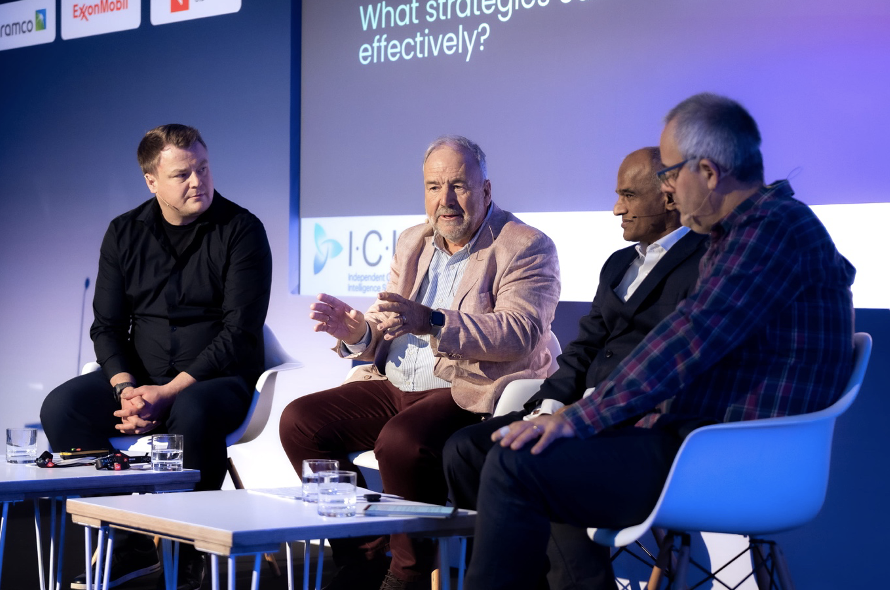
I was pleased to participate in a panel discussion at the ICIS World Base Oils Conference in London, where the focus moved beyond products, pricing and supply dynamics.
Many of the questions from the audience centred on customer engagement and how it is changing across the lubricants and base oils supply chain.
One question stood out:
How Can Lubricant Suppliers Personalise Digital Engagement Without Losing Trust?
This article addresses that question for those working across the lubricants market, including producers, blenders, distributors and commercial teams.
The answer is practical and relevant to daily commercial activity. Customer engagement now starts earlier than many organisations still assume.
How Can Lubricant Suppliers Personalise Digital Engagement Without Losing Trust?
Lubricant buyers expect digital experiences that reflect their specific applications, challenges and operating context. Personalisation at scale works when suppliers use buyer behaviour and industry insight to guide content, while keeping human expertise accessible when it matters. This approach supports trust, improves decision quality and strengthens long-term relationships across the lubricants supply chain.
Personalised at Scale: Designing Digital Experiences That Still Feel Human
Across the lubricants supply chain, digital engagement has become a normal part of how buyers research suppliers, assess credibility and make decisions. What has changed more recently is the expectation that these digital experiences feel relevant and considered, rather than generic or automated.
For many suppliers, this creates uncertainty. Lubricants is a market built on relationships, trust and technical expertise. The idea of personalising engagement at scale can feel at odds with those foundations.
In practice, the opposite is true. When done well, digital personalisation supports trust rather than weakening it.
Why personalisation matters in lubricants
Lubricant buyers are rarely casual purchasers. They are often responsible for uptime, asset protection, safety and cost control. Decisions are influenced by application requirements, operating environments and risk tolerance.
As a result, buyers increasingly expect suppliers to demonstrate understanding early in the process. This expectation shows up digitally before any conversation takes place.
Research across B2B markets shows that buyers are more likely to engage with suppliers who recognise their context and provide relevant information without forcing early sales interaction.
In lubricants, personalisation means helping buyers quickly see that a supplier understands their world. It is less about tailoring messages and more about tailoring relevance.
Digital does not replace human trust
Buyers still value expertise and relationships. What has changed is how and when those relationships develop.
McKinsey research shows that B2B buyers now prefer a mix of digital self-service, remote interaction and in-person engagement. Digital channels support early learning and comparison, while human interaction adds value later through judgement, reassurance and experience.
For lubricants suppliers, this reflects how buyers actually work. Many prefer to explore options independently before speaking to a specialist. When they do engage, they expect the conversation to build on what they already know.
Digital personalisation supports this by making early engagement useful rather than generic.
What personalisation looks like in practice
Personalisation in the lubricants market does not require complex systems or heavy automation. It requires thoughtful design based on buyer behaviour.
Effective approaches include:
- Structuring content by application, industry and role so buyers can find what matters to them
- Using behavioural signals to suggest relevant next steps, such as case studies or technical guidance
- Making human expertise visible and accessible without forcing contact too early
- Ensuring consistency across websites, content and sales interaction
These practices allow buyers to move at their own pace while feeling understood.
They also align with how many lubricant buyers research today, often across multiple digital touchpoints and outside normal working hours.
Personalisation and scale can coexist
One concern often raised is whether personalisation can work at scale without losing authenticity.
In reality, scale is achieved by designing a limited number of well-considered pathways that reflect common buyer contexts.
Most lubricant buyers face familiar challenges around performance, reliability, compliance and cost.
By mapping these shared contexts and aligning digital content accordingly, suppliers can support a wide audience without resorting to generic messaging.
McKinsey’s work on personalisation shows that organisations using data to better understand customer needs consistently outperform those that do not.
In lubricants, this advantage shows up as clearer engagement, better conversations and stronger confidence on both sides.
Trust is built earlier, not removed
There is understandable scepticism in the lubricants market about whether digital engagement weakens trust.
Evidence suggests the opposite. When buyers encounter relevant, well-structured digital experiences that reflect real industry understanding, trust begins to form earlier.
This aligns with findings from Buyer Revolution research, which show that buyers prefer to self-educate digitally before engaging sales and value suppliers who respect that process.
Digital personalisation does not replace human trust but it can prepare the ground for it.
Practical implications for the supply chain
For producers, blenders and distributors, this shift has practical implications:
- Digital engagement should support buyer understanding, not push product
- Sales teams should build on digital insight rather than repeat it
- Marketing and commercial functions need shared visibility of buyer behaviour
- Expertise should be easy to access but not forced
Personalisation works best when it reflects how buyers actually operate rather than how suppliers wish they did.
A considered approach
Personalised digital engagement does not need to be dramatic or complex. It requires clarity, consistency and an understanding of buyer context.
For the lubricants supply chain, designing digital experiences that feel human is about supporting informed decision-making and allowing relationships to develop naturally, at the right point in the journey.
Be sure also to check out Selling Lubricants Smarter that takes the best of the Buyer Revolution data and goes on a journey with our lubricants sales professional from crisis to success!