
Share this article
How Commercial Leaders Can Turn Buyer Revolution Data into Real-World Sales Performance
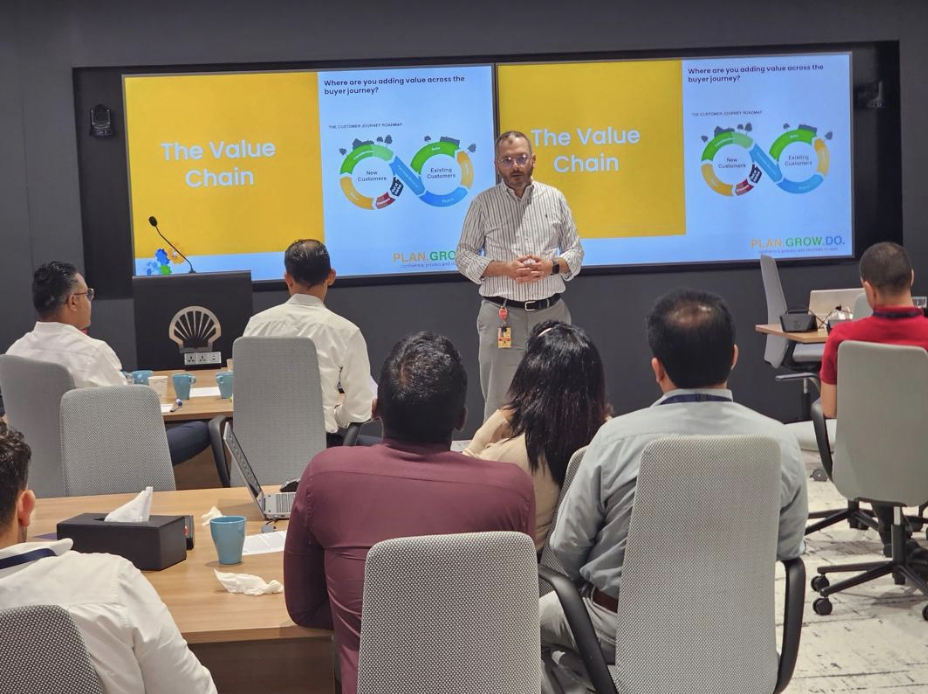
Across the lubricants industry, commercial leaders are feeling pressure from all sides. Customer impatience has increased. Traditional product-pushing methods are hitting diminishing returns. Digital behaviour is shaping buying long before a salesperson is even aware there is an opportunity. And internal teams, often well intentioned, are still working from playbooks that suited a market of ten years ago.
The Commercial Excellence Programme development exists to close that gap. Sometimes a focus solely on training interventions doesn’t quite cut it. What may be required is a longer term strategic plan that incorporates real world support, a blend of online and in room training and a more strategic fit to business development.
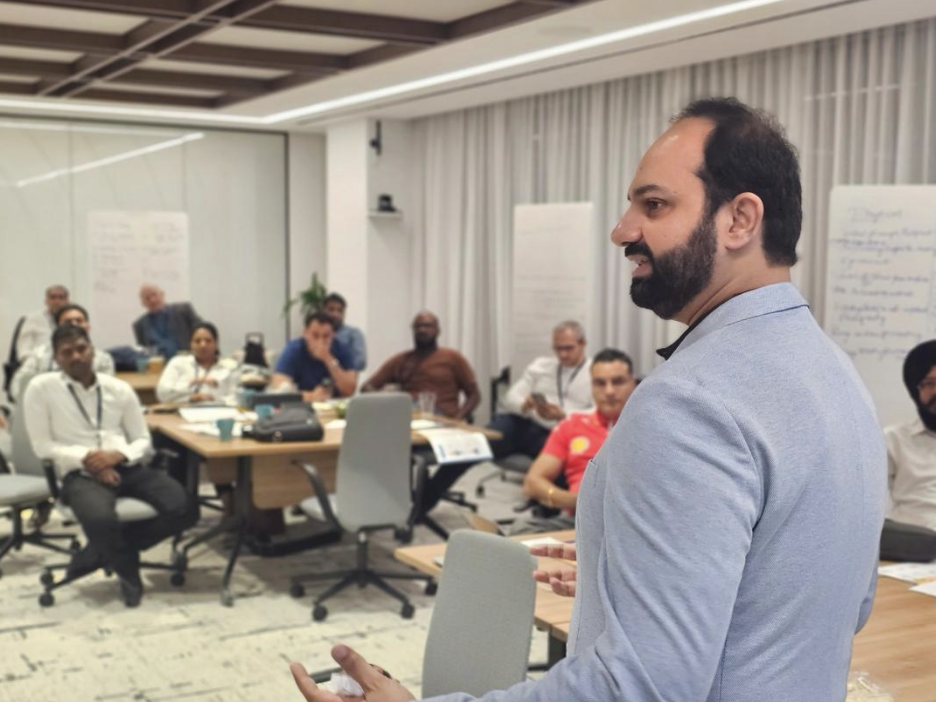
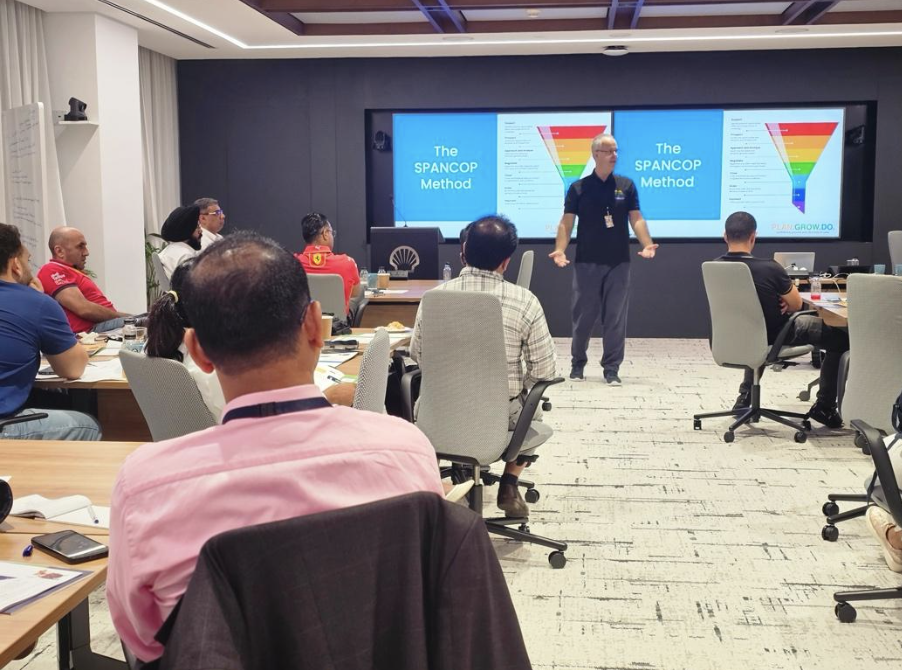
The recent Commercial Excellence programme launch for Shell and it’s Middle East distributor teams makes this clearer than ever. Feedback from participants showed high relevance, high commitment to change, and an unmistakable message: when sellers see the world through the buyer’s eyes, performance follows. Satisfaction rated above 90% across all interventions, and the most cited gains were the very areas the Buyer Revolution proves are essential.
For sales directors trying to modernise teams, the lessons are both reassuring and challenging. The reassuring part: the path to improvement is clear. The challenging part: it requires new habits, not just new targets.
Below, we break down what the Buyer Revolution data tells us, what your teams actually experienced, and how you can also turn this into real performance shifts.
Curious to know more? Begin your journey with one of our resources below:
Sales Excellence Download and Assessment – Get the insight to know where you are and where you want to get to.
The Future Lubricants Salesperson e-book – What buyers expect next and how sales teams must evolve
B2B Sales Readiness Quiz – Are you prepared to elevate your B2B sales strategy?
The Buyer Revolution – turn insights into a sales advantage!
Now, back to the learning from our Commercial Excellence Programme…
1. Buyers Are Self-Educating, So Sellers Must Prepare Earlier
The Buyer Revolution data has been unambiguous for months.
• 93 percent of lubricant buyers use search engines before speaking to a supplier
• 75 percent know what they need before engaging your team
• Reputation, value proposition, and early insight matter more than ever
This directly mirrors what recent participants highlighted as most valuable:
• “Research before reaching the customer”
• “Seeing the other side of the relationship”
• “Understanding buyers think sellers are unprepared”
The wake-up call landed especially hard when the group confronted the statistic that 82 percent of buyers think sellers arrive unprepared.
For a sales director, the pain point is obvious.
Unprepared reps don’t just lose opportunities; they never get invited back.
Practical actions:
• Mandate a pre-call planning framework before every meeting.
• Build a central library of relevant case studies, applications, and technical notes, so sellers aren’t scrambling for answers.
• Coach for preparation, not winging it. It takes the same time, but produces very different results.
2. Speed of Response Is No Longer a “Nice to Have”
The data puts this beyond doubt:
• 34.5 percent expect a response within 3 hours
• 51.7 percent call it very crucial
• 96.6 percent believe fast responses strengthen long-term relationships
Participants echoed this data repeatedly. The first thing they noticed? Many of the slowdowns in their day-to-day were unnecessary. The second? Buyers assume a slow response equals low priority.
Sales directors often carry the anxiety of a slow pipeline. But the data shows the fault often sits earlier, at the responsiveness stage, not at the negotiating stage.
Practical actions:
• Introduce a “response acknowledgement” rule. Not a full answer, but a signal of presence.
• Give the team templated updates when approvals or technical checks cause delays.
• Build a mechanism for after-hours coverage that doesn’t burn people out.
This is not about working longer; it’s about removing lag.

3. Personal Connection Beats Corporate Messaging Every Time
The People or Brand dataset shows that:
• 76 percent say personal connection strongly influences who they buy from
• 0 percent enjoy corporate-only communication
• 86.7 percent highly value reps who give insight into specific problems
This validates a truth many sales directors already feel but have struggled to operationalise: the rep is not just a messenger. They are the advisor.
Some stark takeaways from the frontline in relation to this include…
• “Account manager… a call does not mean a deal”
• “Adding value builds trust”
• “Personal message gives more insight than a brochure”
For Directors, the pain point is how inconsistent personal value delivery can be across a team. One high performer builds trust instinctively. Another hides behind emails and product sheets.
Practical actions:
• Teach teams to use simple positioning messages that show relevance quickly.
• Encourage a content rhythm where reps share short insights on LinkedIn for example, aligning with the finding that 92 percent of buyers are active there, largely in the evening.
• Coach reps to “champion the brand” rather than wait for marketing material to do it for them.
Consistency of personal presence builds trust before the first meeting even happens.
4. Buyers Are Stretched Thin So Sellers Must Adapt Their Timing and Channels
Your Day to Day Activities research revealed:
• 83 percent of buyers split time across many responsibilities
• 66 percent use LinkedIn in the evening
• Digital meetings are preferred in early stages
This explains one of the biggest frustrations sales directors share:
“We can’t seem to get hold of them” or “They don’t respond to us”.
Buyers aren’t always ignoring you…they’re most likely busy working on other things!
Sales professionals admitted they often assumed buyers had the same rhythm as them. We supported a recalibration here:
- Prepare shorter, sharper meetings
• Use digital more intentionally
• Follow up with something useful, not something lengthy
Practical actions:
• Shift prospecting messages to evening LinkedIn windows for visibility.
• Build 10-minute meeting scripts for early-stage discovery.
• Equip sellers to use digital platforms properly, instead of defaulting to phone calls.
Efficiency wins attention.
5. The Role of the Account Manager Is Still Valuable, But Only When They Add Real Value
The Account Manager dataset makes two things crystal clear:
• 75 percent of buyers already know what they want before they meet you
• 67 percent want more value-adding interaction, not more contact
• Doing it cheaper ranked last
This aligns perfectly with what our team suggested;
• “The last Sales Process activity really made us think differently”
• “Planning and qualification will be my focus next week”
Sales directors are often stuck between protecting margins and supporting teams who default to discounting. The Buyer Revolution gives a better path: value behaviours.
Practical actions:
• Use a sales process as the shared language for qualification, focus, and forecasting.
• Train reps to articulate application and product knowledge clearly.
• Make value visible in every stage, not just at proposal.
This is where commercial excellence becomes tangible.
Commercial Excellence Is Not Theory — It’s Behaviour Change
Across our Commercial Excellence programme, participants consistently committed to:
• Researching customers before contact
• Using a template for pre-call planning
• Listening fully (and practising!)
• Asking better questions
• Applying sales process discipline
• Using digital channels more intentionally
This is what sales directors need. Not more noise. Not more dashboards.
Better behaviour, done consistently, across the team.
The Buyer Revolution gives the data.
Commercial Excellence gives the structure.
Your coaching gives the reinforcement.
Put together, it becomes commercial transformation.
If You’re Ready to Turn Buyer Behaviour into Sales Performance
The lubricants sector is changing quickly, and your customers are changing even faster. If you want your team to sell how buyers like to buy, not how they prefer to sell, Plan Grow Do can help.
From data-driven assessments to Commercial Excellence programmes, from sales process adoption to real-world sales coaching, the next step is simple:
Talk to Plan Grow Do about everything Buyer Revolution and Commercial Excellence in the lubricants industry.
Let’s build the next generation of high-performing sales teams, together.
For more discussion about the changing lubricants market and how buying and selling is changing, try these supporting articles,
https://plangrowdo.com/buyer-revolution/customer-centricity-in-lubricants-the-uncomfortable-truth/
https://plangrowdo.com/b2b-sales-process/why-your-sales-process-starts-too-soon/
https://plangrowdo.com/buyer-revolution/from-volume-to-value/