Share this article
From Highland Roads to Industry Leadership: Simon Campbell’s Journey in Lubrication
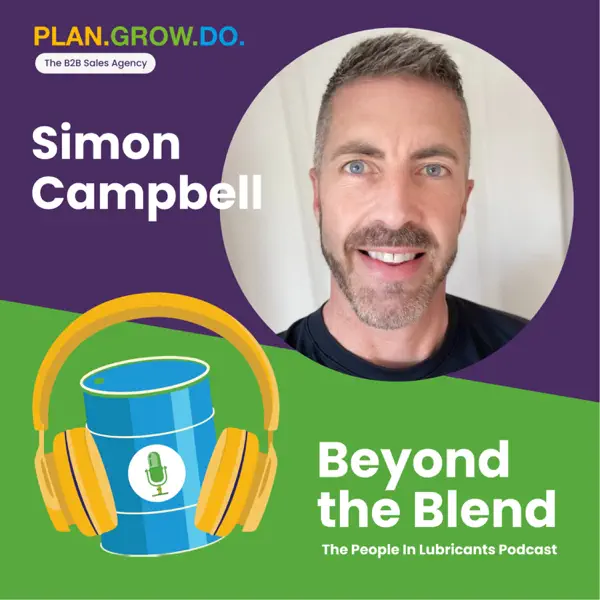
The lubricants industry is full of people who never expected to work in it. In this episode of Beyond the Blend, Steve Knapp sits down with Simon Campbell to explore a career that started almost by accident and developed into a leadership role at one of the UK’s most respected lubrication reliability specialists.
From early sales roles travelling the length of Scotland to leading a purpose driven business culture at Pure Lubrication, Simon shares the lessons he has learned about relationships, leadership and building a business the right way. It is a conversation that reveals how careers in this industry are rarely linear, but can be deeply rewarding for those who commit to learning and growth.
Falling into the lubricants industry
Like many professionals across the lubricants supply chain, Simon Campbell did not
plan to enter the industry. After studying hospitality management at university and briefly managing a hotel, he quickly realised that the hospitality world was not the long term career he wanted.
Following a period working in retail, an opportunity appeared at Highland Fuels as a sales negotiator. That role introduced him to the fuels and lubricants sector and became the starting point of a career that would span decades.
What began as simply another job quickly developed into something more interesting. The variety of customers, the technical side of the products and the commercial challenges of selling began to open up opportunities that Simon had not previously considered.
Learning sales on the road
Simon’s early experience in sales involved travelling extensively across Scotland,
covering everything from the Highlands and Islands to major cities further south. It
was a demanding role that involved long journeys and plenty of time working independently.
At the beginning, technical knowledge of lubricants was limited. Much of the early
sales approach focused on price, which at the time was a common way to compete
in the market. Customers ordering fuel would often be asked if they also needed
lubricants, making the products an add on rather than a core conversation.
Over time, however, exposure to customers and real world challenges began to build
both confidence and understanding. The role became an important learning ground
that laid the foundation for everything that followed.
Moving from price selling to value selling
A major turning point came when Highland Fuels joined forces with another distributor following the ExxonMobil merger, creating The Lubricant Company. The combined business brought together different approaches to selling lubricants.
Where some parts of the business had historically focused on volume and price, others emphasised technical expertise and application knowledge. This shift exposed Simon to a much deeper understanding of lubrication and reliability services.
Rather than simply selling products, the conversation with customers began to revolve around improving equipment performance, solving problems and reducing downtime. That change in mindset from commodity selling to value based solutions proved to be one of the most influential developments in Simon’s career.
The influence of mentorship
Throughout his time at The Lubricant Company, Simon benefited from working
alongside experienced industry professionals, particularly Andrew Samuel.
Observing how seasoned sales leaders approached customer conversations became an important learning experience.
Joining customer visits and watching how experienced colleagues asked questions,
diagnosed problems and presented solutions helped accelerate Simon’s understanding of the market. It also built the confidence needed to engage with more complex industrial environments.
Moving beyond smaller accounts into large manufacturing sites and major customers initially pushed him out of his comfort zone. Yet these moments often proved to be the most valuable learning opportunities.
The power of long term relationships
One of the most consistent themes in Simon’s story is the importance of relationships. Early experiences selling on price gradually gave way to a more strategic approach built on trust and partnership.
Successful lubricant suppliers rarely win by chasing short term orders. Instead, they
succeed by listening carefully to customers, understanding operational challenges and becoming a reliable partner over many years.
For Simon, this meant focusing not only on winning new business but also on continually developing existing relationships. Customers who trust their supplier for advice and support often become long term partners rather than transactional buyers.
Customer service as a growth strategy
A pivotal moment in Simon’s career came when he moved into a customer service leadership role within The Lubricant Company. Rather than spending all his time on the road, he was asked to build and lead a centralised customer service team.
The role quickly demonstrated that strong account management could drive significant growth even without constant face to face visits. By proactively communicating with customers and understanding their needs, the team could nurture relationships and identify new opportunities.
This remote account management model proved highly successful. It reinforced the idea that customer service is not simply an administrative function but a powerful engine for business development.
Human connection still matters
Despite advances in automation and digital communication, Simon believes that genuine human connection remains essential in customer relationships.
Simple actions such as remembering previous conversations, communicating honestly and responding quickly can make a significant difference. Customers value suppliers who treat them as people rather than account numbers.
While digital tools and automation can improve efficiency, they cannot replace trust.For Simon, the best businesses combine modern systems with a genuinely human approach to communication.
From corporate structure to entrepreneurial growth
After many successful years, The Lubricant Company was eventually acquired by World Fuel Services. The move introduced Simon to a much larger corporate environment and provided new opportunities to work on integration projects and strategic initiatives.
Working within a global organisation brought valuable experience but also highlighted the differences between corporate structures and independent businesses.
When the opportunity arose to help build a new venture with Andrew Samuel, Simon
saw the chance to return to a more entrepreneurial environment where culture and
direction could be shaped directly by the leadership team.
Building a culture driven business
Pure Lubrication was founded with the ambition of building more than simply another
lubricant distributor. The goal was to create a business built around strong values and a supportive team culture.
For Simon, culture is not something written on a wall but something that develops
naturally through shared beliefs and behaviours. Many of the team members had worked together before, allowing them to recreate the positive environment they had built previously.
The business also aims to balance commercial growth with wider responsibilities, including environmental awareness and charitable work within the community.
Leadership built around the team
Moving into the role of managing director required Simon to develop new leadership
skills. Rather than attempting to be the expert in every area, his approach focuses on building a strong team and trusting the people around him.
Leadership, in this context, is about enabling others to succeed. By surrounding himself with specialists in different areas, Simon believes the organisation becomes stronger and more resilient.
The role therefore becomes less about directing every action and more about creating the environment where talented people can perform at their best.
Hiring for mindset not just skill
When recruiting new team members, Pure Lubrication places significant emphasis
on mindset and cultural fit. While technical knowledge and sales experience are valuable, they are not always the most important qualities.
Skills can be taught and developed over time. Attitude, curiosity and the ability to work collaboratively are far harder to instil.
By prioritising the right people rather than simply the most experienced candidates, the business aims to maintain the culture that has helped it grow.
Opportunity in an overlooked industry
Although lubricants may not appear glamorous from the outside, Simon believes it is
an industry full of opportunity. The sector supports critical infrastructure, manufacturing and transport around the world.
For those willing to learn, it offers a wide range of career paths from technical expertise to commercial leadership.
Simon’s own journey, from an uncertain career start to leading a growing lubrication reliability business, demonstrates just how far those opportunities can take you.
Final thoughts
Simon Campbell’s career is a reminder that success in the lubricants industry is rarely about following a perfectly planned path. Instead, it often comes from curiosity, learning from others and building strong relationships along the way.
His story also highlights the importance of culture and purpose in building a business that people genuinely want to be part of. When teams share a common vision and values, growth becomes a natural outcome rather than the only objective.
Listen to the full conversation
This article is inspired by the conversation between Simon Campbell and Steve Knapp on the Beyond the Blend podcast.
To hear the full story and explore more conversations with leaders across the lubricants supply chain, subscribe to Beyond the Blend and join us as we continue to explore the people behind the products that keep the world moving.
Spotify: https://lnkd.in/eSZw_V3q
Apple: https://lnkd.in/ecu_uTiq
YouTube: https://lnkd.in/esQqczwG