I was reminded during a conversation with Michal Reznik and Petya Doncheva this afternoon that one of my phrases has become a staple in the Balkans. That phrase is: “Suspects Never Buy.”
It’s a simple truth in sales, and one that is especially emphasised in frameworks like SPANCOP. According to SPANCOP, a suspect is someone who could buy but hasn’t yet shown enough interest or qualification, whereas a prospect is a lead that has been qualified and has shown genuine interest in your offering. The aim of prospecting isn’t just to add names to your pipeline but to actively turn suspects into prospects.
A suspect is anyone who fits your target market or seems like they might have a need for your product. But just because they’re in your target market doesn’t mean they’re ready to engage. They might not know about your product, may not have the budget, or simply aren’t ready to buy. A prospect, on the other hand, is someone you’ve engaged with, someone who has shown interest, has a need, and crucially, has the means to move forward.
This distinction is key. In SPANCOP, after suspecting (S), the process moves to prospecting (P) — the step where you begin to qualify the lead and assess whether they’re worth your time and effort. It’s at this stage where you build the holding pattern I often talk about taking those suspects and turning them into viable prospects who can then move through the rest of the process: Approach, Negotiate, Close, Order, and Pay.
But have you got the prospecting side of your sales job in balance? Or are you spending too much time with suspects that never buy, while letting real prospects slip through the cracks?
Here are some key questions you should ask yourself to assess where you stand:
🙋🏽♂️ Where does prospecting fall in my daily priorities?
Prospecting is the bedrock of your sales pipeline. If it’s not consistently prioritised, you risk creating gaps that lead to missed opportunities. By regularly scheduling time for prospecting, you can keep your funnel flowing with potential leads.
🙋🏽♂️ How many highly qualified prospects am I working with?
Quality over quantity is crucial here. Sure, it’s important to build a list, but it’s even more critical to focus on prospects who are genuinely interested and have the potential to convert. Suspects might fill your pipeline, but prospects are the ones who will progress through SPANCOP and close.
🙋🏽♂️ Is the time to close a prospect decreasing?
The quicker you close, the more effective your process. A decreasing close time signals that you’re identifying prospects’ needs faster and delivering value more efficiently. If the opposite is true, it might be time to review your approach.
🙋🏽♂️ What percentage of deals require discounts?
Discounts can often indicate that something’s off—either with your value proposition or with how you’ve qualified your prospect. If you find yourself discounting often, it might mean you’re focusing on prospects who don’t fully appreciate the value of your offer.
🙋🏽♂️ What is my lifetime value of a customer?
The lifetime value (LTV) of a customer is key to understanding how much effort and resource you should invest in acquiring and retaining them. By focusing on high-LTV customers, you ensure your efforts are channelled towards long-term value, not just quick wins.
🙋🏽♂️ What part of my prospecting is most effective? What am I improving?
Sales is an ever-evolving skill. Recognising the most effective parts of your process—and actively working to improve weaker areas—helps you become more efficient and successful. Never stop refining your approach.
🙋🏽♂️ Do I see prospecting as an activity or a habit?
Effective prospecting should be a habit, not just an occasional task. Those who integrate it into their daily routine are always building relationships, identifying opportunities, and positioning themselves for future success. Make prospecting a habit, not a one-off activity.
By keeping your focus on suspects who are ready to move into the prospect stage and qualifying your leads effectively, you create a strong pipeline that progresses smoothly. If you’re not consistently building a pipeline, you’re at risk of missing future opportunities.
So, continually ask yourself again: Have you got your prospecting strategy in balance?
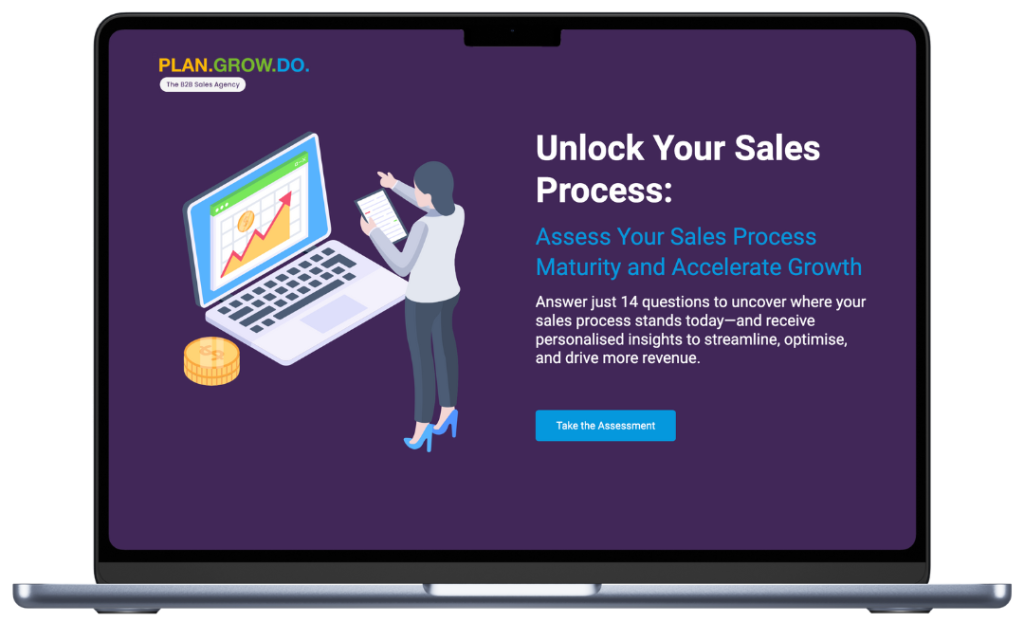
How mature is your sales process? Let's find out! 🔍
If you’re looking to elevate your sales team’s performance and drive more revenue, it all starts with understanding where you stand today.
Our 14-question quiz gives you a personalised Sales Process Maturity Report that dives deep into four critical areas:
✨ Implementation ✨ Effective Use ✨ Value Creation ✨ Strategic Alignment
Based on your answers, you’ll receive tailored recommendations to help you refine and optimise your sales process.
It’s all about practical steps you can take to close more deals and achieve long-term success!
🚀 Ready to uncover hidden opportunities in your sales strategy?
Take the quiz now and get your roadmap to a more efficient, results-driven sales process.