Share this article
The Crucial Roles of Hunters and Farmers: Skills, Behaviours, and Attributes
In B2B sales, two roles stand out for their critical contributions to business growth and their relevance is often the subject of much debate: Hunters and Farmers.
While both positions aim to drive revenue and foster customer relationships, they do so through distinct approaches and require different skill sets, behaviours, and attributes.
Understanding these roles in depth can help organisations optimise their sales strategies and ensure long-term success.
Context
Earlier this year, during a discussion on Sales Excellence at the DCC Energy Conference, I was asked a pertinent question about the skill sets of Hunters and Farmers.
The inquiry highlighted a common concern: the risk of a sales force being overly biased toward one role at the expense of the other. This imbalance can lead to missed opportunities, whether in growth or account development.
Additionally, there is a risk of reinforcing a behaviour among buyers that suggests sellers are only interested in quick wins rather than long-term, value-based relationships.

Hunters
To excel in the role of a Hunter, an individual must possess a unique combination of skills, behaviours, and attributes. These elements are essential for effectively identifying and engaging potential customers, overcoming challenges, and driving sales success.
The following points outline the key competencies and qualities that define a successful Hunter:
Skills:
1. Prospecting and Lead Generation: Hunters excel at identifying potential customers. They use various tools and methods to research and reach out to prospects who might benefit from their company’s products or services.
2. Communication: Effective verbal and written communication are crucial for Hunters. They must clearly articulate value propositions, engage prospects, and handle objections with finesse.
3. CRM Proficiency: Hunters need to be adept at using Customer Relationship Management (CRM) systems. These tools help them track interactions, schedule follow-ups, and manage their sales pipeline efficiently.
4. Sales Automation Tools: Familiarity with sales automation tools (like email sequencing software and LinkedIn Sales Navigator) helps Hunters streamline their outreach efforts and maintain consistent communication with prospects.
Behaviours:
1. Persistence: Hunters often face rejection but must remain persistent. They follow up consistently and maintain a positive attitude despite setbacks.
2. Curiosity: A natural curiosity drives Hunters to understand their prospects’ needs and pain points deeply. This curiosity helps them tailor their messaging and build stronger connections.
3. Adaptability: The ability to adapt to different personalities and industries is vital. Hunters must quickly adjust their approach based on the prospect’s industry, role, and specific challenges.
Attributes:
1. Resilience: The role can be demanding, with high targets and frequent rejections. Resilient Hunters bounce back quickly and stay motivated.
2. Empathy: Understanding and relating to prospects’ challenges allows Hunters to build rapport and trust, making their outreach more effective.
3. Goal-Oriented: Hunters are driven by goals and metrics. They are motivated by achieving targets and continuously improving their performance.
Farmers
To thrive in the role of a Farmer, an individual must possess a distinct set of skills, behaviours, and attributes tailored to nurturing and developing long-term relationships with key clients. These elements are critical for fostering trust, driving strategic account growth, and ensuring client satisfaction.
The following points outline the key competencies and qualities that define a successful Farmer:
Skills:
1. Relationship Management: Farmers excel in building and maintaining long-term relationships with key clients. They understand that trust and rapport are the foundation of successful account management.
2. Strategic Thinking: Farmers think strategically about how to grow their accounts. They identify opportunities for upselling and cross-selling while aligning their solutions with the client’s long-term goals.
3. Negotiation: Effective negotiation skills are crucial for Farmers. They must balance the needs of their clients with the objectives of their organisation to achieve mutually beneficial agreements.
4. Industry Knowledge: Deep knowledge of the client’s industry helps Farmers provide valuable insights and position their company as a trusted advisor.
Behaviours:
1.Proactivity: Farmers proactively identify potential issues and opportunities within their accounts. They don’t wait for problems to arise but anticipate and address them early.
2. Collaboration: Working closely with internal teams (such as product development, marketing, and customer support) is key. Farmers ensure that their clients receive a seamless and comprehensive service experience.
3. Customer-Centric Approach: A strong focus on the customer’s needs and goals defines successful Farmers. They prioritise the client’s success, which in turn drives their own success.
Attributes:
1. Trustworthiness: Being a reliable and trustworthy partner is essential. Clients must feel confident that their Farmer has their best interests at heart.
2. Analytical Skills: Farmers analyse data to understand their client’s business performance and identify growth opportunities. They use this information to make informed recommendations.
3. Patience: Building and growing key accounts is a long-term effort. Farmers need patience and a steady approach to nurture these relationships over time.
Cold Calling vs. Account Management
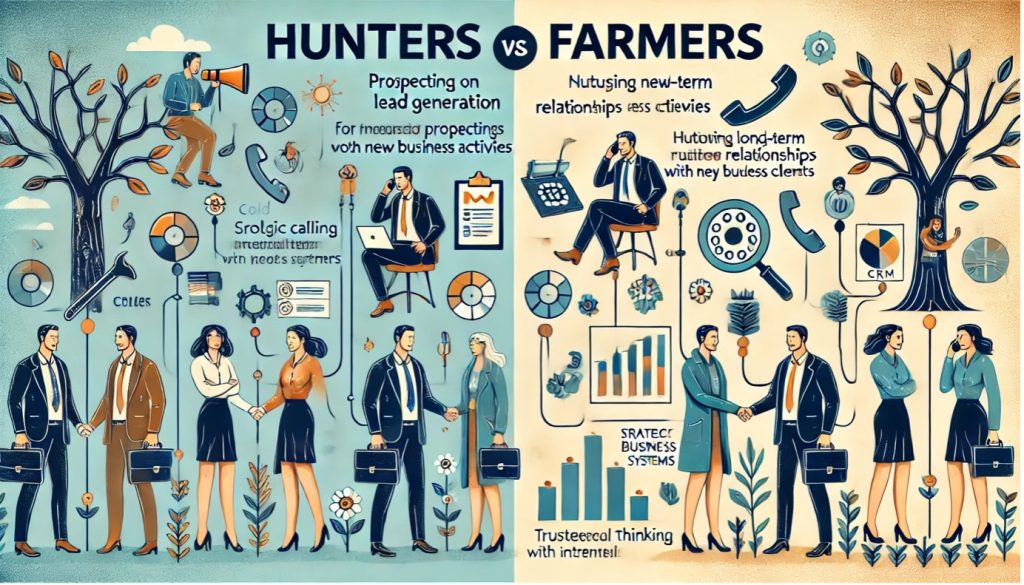
The distinct nature of cold calling and account management necessitates unique skill sets and approaches for each role. While cold callers and Farmers (account managers) operate at different ends of the sales spectrum, understanding their specific functions can illuminate the complementary strengths they bring to an organization. Below, we explore the contrasting focuses and shared learnings between these two vital roles:
Cold Calling:
- Cold callers focus on making appointments and qualifying opportunities rather than nurturing relationships for long-term benefit.
- Skills required include persistence, resilience, and the ability to handle frequent rejections.
- Cold callers excel in quick rapport-building and persuasive communication, which are crucial for initial contact.
Account Management:
- Farmers prioritise relationship building and strategic thinking for long-term client success.
- They manage complex negotiations and maintain deep industry knowledge to provide valuable insights to their clients.
Cross-Disciplinary Learning
Despite their distinct roles and approaches, Hunters and Farmers can gain valuable insights from each other to enhance their effectiveness and overall sales performance. By embracing cross-disciplinary learning, these professionals can develop skills that complement their primary functions and drive greater success across the organisation.
The following points highlight the key lessons that can be shared between Hunters and Farmers:
1. Persistence and Resilience: Cold callers develop a thick skin and the ability to keep going despite frequent rejections—an invaluable trait in any role.
2. Communication Skills: Cold callers often excel in quick rapport-building and persuasive communication, which are useful in various customer interactions.
3. Relationship Management: Farmers can teach the importance of long-term relationship building and strategic thinking, which can improve customer retention and satisfaction.
4. Customer Insights: Both roles can share insights about customer needs and behaviours, enriching the overall customer strategy.
5. Adaptability: Cold callers can adapt their pitch on the fly, while Farmers tailor strategies for long-term engagement. Learning from each other can enhance flexibility and effectiveness.
Conclusion
Both Hunters and Farmers play pivotal roles in the sales ecosystem. While Hunters focus on the initial stages of the sales funnel, generating leads and setting up opportunities, Farmers concentrate on nurturing and expanding relationships with key clients.
Together, they create a powerful synergy that drives business growth and customer satisfaction. By recognising and developing the distinct skills, behaviours, and attributes of each role, and by learning from each other, organisations can build a robust sales force capable of achieving sustained success.
However, it is essential to strike a balance between these roles to avoid reinforcing behaviours among buyers that suggest sellers are only interested in quick wins. By fostering a culture that values both immediate results and long-term relationships, organisations can ensure that their sales force is well-equipped to drive sustainable growth and customer loyalty.
I trust this article is a more comprehensive answer to my DCC Energy questioner and might help you find the right answer as to the value in both Hunters and Farmers.
Sales is Changing.
It has to, thanks not only to the worldwide pandemic but also because the “new kids on the block”, aka the millennial generation, have an entirely different perspective on the world…
Discover the new playbook that can take us forward.
Discover Modern Sales Leadership.