Share this article
Why Your Sales Process Starts Too Soon
The Intersection Has Moved
In the past, sales began with a handshake, a brochure, and a firm pitch. Sales reps approached buyers early, full of enthusiasm and a bag of features. Buyers, by contrast, waited to be educated. But today, the buyer is not waiting.
The traditional sales process assumed a linear progression from Suspect to Prospect to Need, with sellers firmly in control. But the modern buyer is already well along their journey by the time a seller gets involved. This shift has turned SPANCOP inside out. Buyers now enter the seller’s radar at N (Negotiation) or C (Close), skipping S (Suspect) entirely. And that changes everything.
We now live in a world of buyer-led journeys, self-service education, and digital validation. Sellers who show up early with the wrong conversation aren’t seen as helpful. They’re seen as unprepared.
The Buyer Revolution research confirms this shift in B2B lubricant sales.
The Invisible Journey: Solving Problems Without You
Lubricant buyers today don’t begin their journey with a sales call. They begin with a problem. And they want to solve it themselves.
75% of B2B lubricant buyers say they start their procurement process digitally.
73% prefer digital meetings in the early stages of supplier research.
75% expect to increase their use of digital channels for communication, research, and engagement.
Buyers want to stay invisible for as long as possible. They search. They compare. They download. They consult their networks. And only when they’re satisfied that your solution might be right, do they make themselves known.
But here’s the catch: when they finally do engage with a seller, they’re not at the beginning. They’re nearing the end.
79% of lubricant buyers say they already know what they want to buy before speaking to a sales rep.
This is where most B2B lubricant sales teams get it wrong. They open with discovery questions, trying to “understand the need” of someone who’s already got the answer. They pitch features to a buyer looking for value confirmation. No wonder sellers are perceived as unprepared.
Validation, Not Persuasion
Welcome to the Validation Economy.
In the lubricant sector, we’ve entered a commercial reality where trust, proof, and relevance hold more currency than pitch decks, presentations, or product claims.
Buyers aren’t just looking for products. They’re looking for assurance.
They’re not comparing brochures. They’re comparing experiences.
They don’t want to be convinced. They want to be validated.
This shift has profound implications for how lubricant companies communicate with B2B buyers:
- Your spec sheet isn’t enough. Buyers want to see case studies, testimonials, and third-party endorsements that map to their world.
- Your sales presentation needs to be reframed. Not as an exploration of features, but as a confirmation of fit.
- Your account managers must be fluent in problem-solving — not just product detail.
In the Validation Economy, every buyer touchpoint is a test:
- Can I trust you?
- Do you understand my business?
- Are you adding value I haven’t already found online?
This doesn’t mean slicker marketing. It means deeper alignment.
Sellers must now become validators of decision logic — the professional sounding board who confirms, sharpens, or supports the buyer’s existing direction.
And those who do that well? They won’t just win the deal. They’ll win trust, loyalty, and long-term preference.
The SPANCOP Reframe: Where It Really Starts
SPANCOP is a powerful B2B sales model: S – Suspect, P – Prospect, A – Approach and Analyse, N – Negotiation, C – Close, O – Order, P – Pay.
But in the old world, it was seller-led.
In today’s world, the lubricant buyer has already done the first three stages alone. By the time a seller is looped in, the buyer is seeking Negotiation and Close – and maybe even preparing Order and Pay.
If your team is still selling like it’s 1995, they’re stuck in “Approach” while the buyer wants a contract.
This is why 82% of buyers say sellers appear unprepared.
Trust Is a Precondition, Not an Outcome
Buyers don’t want to build trust with a seller. They want to verify trust has already been established.
That’s why the quality of your materials, your relevance on digital platforms, and your ability to communicate with clarity are essential.
Yet, astonishingly, 0% of buyers said supplier materials offered “unique insight to my specific problem.”
That’s not a gap. It’s a chasm.
Your content needs to be:
- Buyer-led
- Contextually useful
- Focused on application, not product
And your outreach? Personalised.
53% say personalised outreach builds trust. And they’re right.
Generic outreach breaks rapport before it begins.
Follow Up, or Fall Behind
Sellers often obsess about the first contact. But the real killer is the second.
71% of buyers say over 30% of Account Managers fail to follow up when they promised.
That doesn’t just frustrate. It destroys trust.
Responsiveness builds relationship equity. Silence spends it.
What This Means for Top-of-Funnel Activity
If buyers are invisible until they seek validation, what does that mean for the top of your funnel?
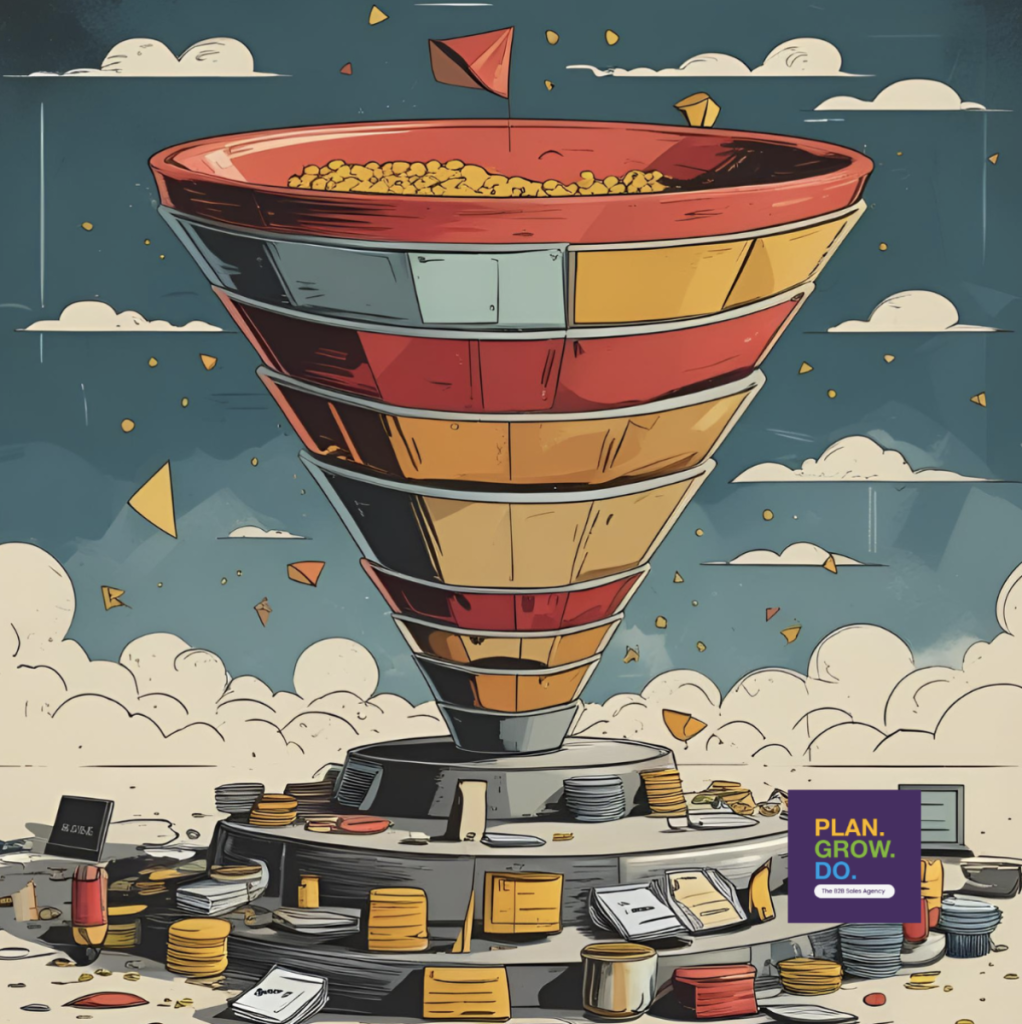
It means the traditional funnel is now upside down:
- Awareness isn’t created by cold calls
- Interest doesn’t come from brochures
- Desire isn’t sparked by features
Buyers already know what they want. They need reasons to trust you.
That’s why social proof, insight-led education, and a helpful digital footprint are so critical.
The job of top-of-funnel activity now is to:
- Be found
- Be clear
- Be credible
If you’re not discoverable and relevant during the buyer’s invisible research phase, you won’t be invited to the conversation.
The Modern Seller's Mandate
To thrive in this environment, sellers must:
- Shift from Educator to Validator
Start where the buyer is, not where your pitch begins. - Respond with Precision, Not Persuasion
Focus on adding clarity, not complexity. - Invest in Digital Trust
Your LinkedIn, website, and content are your credibility currency. - Make Personalisation a Standard
Use relevance as your door-opener, not scripts. - Follow Up, or Be Forgotten Your consistency is as important as your competence.
Conclusion: The Seller Still Matters
Yes, buyers are doing more alone. Yes, they arrive later. Yes, they demand faster, smarter, more personalised interaction.
But that doesn’t mean the seller is obsolete.
It means the wrong kind of seller is obsolete.
The modern lubricant buyer wants:
- Validation of their logic
- Confidence in your delivery
- Help navigating internal processes
They want to trust you. But they’ll only invite you in after they trust the research they’ve done.
Your job is no longer to start the journey. It’s to finish it.
And finish it well.
Research Source: Buyer Revolution
The data referenced in this article is drawn from the Buyer Revolution research project — the first initiative to explore the lubricant buyer’s experience across the full value chain. The findings are based on anonymised survey responses gathered across five research areas:
- Solve Your Own Problems – exploring the invisible self-guided phase of the buyer journey
- Speed of Response – understanding how timing influences perception and decision-making
- People or Brand – investigating trust-building, personalisation, and reputation
- Your Day-to-Day Activities – showing how buyers manage time and balance decision-making
- The Account Manager – revealing where sellers fall short and what buyers expect next
The insights presented here reflect the common themes and behavioural shifts observed across these five data sets, revealing how sellers must now adapt to meet buyers at the right moment with the right message.
For more information, visit: plangrowdo.com/the-buyer-revolution