Share this article
Sales and Marketing in the Lubricants Industry: Why Alignment Matters More Than Ever
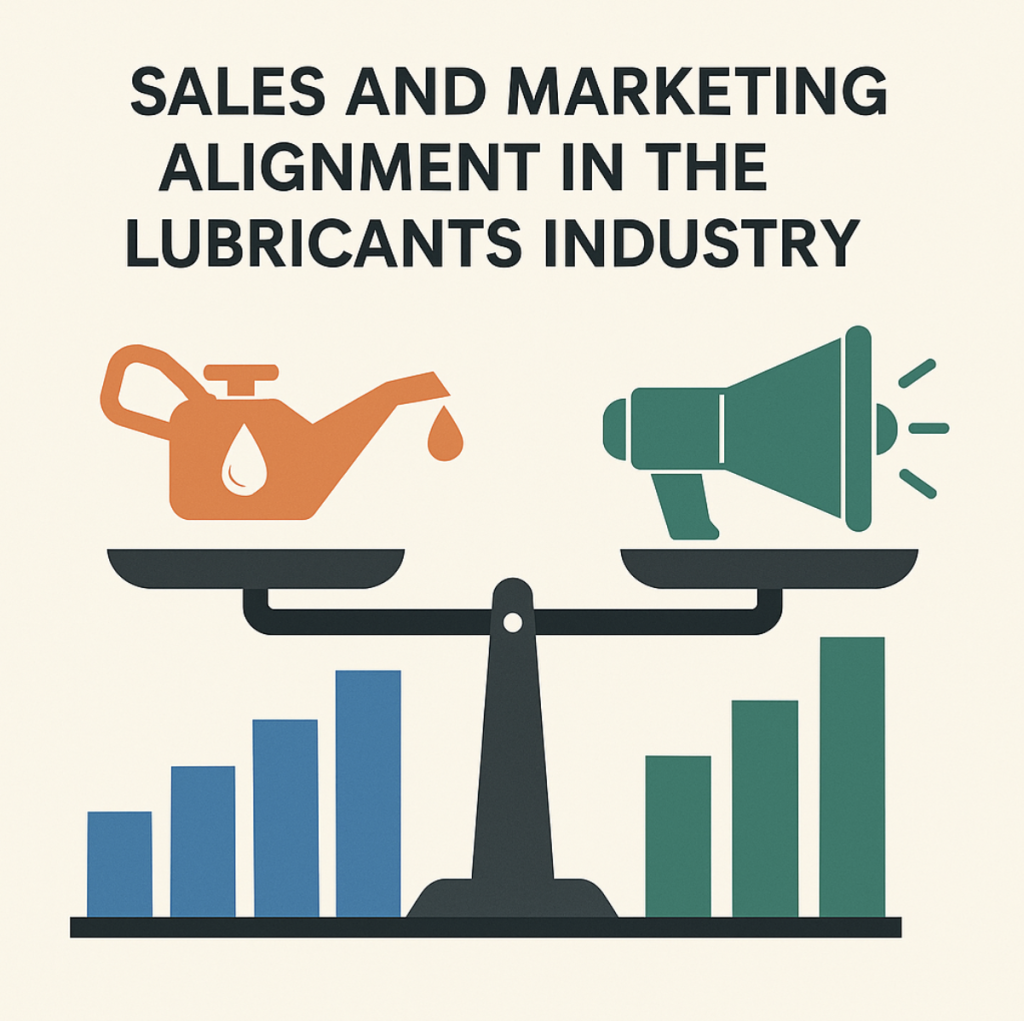
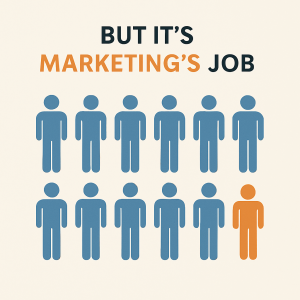
In the lubricants industry, the sales function has always carried the weight of customer engagement. Sales teams are often the visible face of the business, with account managers and reps forming direct relationships with buyers. Marketing, by contrast, has typically played a lighter role, sometimes outnumbered by sales ten to one. That imbalance leaves marketing stretched thin, delivering bursts of campaign activity rather than sustained, buyer-centred engagement.
At first glance, this structure might appear logical. After all, lubricants are often considered a relationship-driven sector where product catalogues, technical specifications, and personal rapport have traditionally won the day. But the Buyer Revolution status report highlights a very different reality. Buyers are more informed, more impatient, and more demanding than ever before. They are doing extensive research before speaking to a supplier, they expect rapid and personalised responses, and they trust people over brands when making decisions.
In this environment, campaign-only marketing is not enough. Reputation, trust, and value need to be built consistently across multiple touchpoints. The role of marketing cannot be reduced to filling brochures or running quarterly promotions. Instead, sales and marketing must work hand in hand, creating an alignment that strengthens both functions and delivers what modern lubricant buyers expect.

What the Buyer Revolution Research Tells Us
The Buyer Revolution studies, conducted with thousands of lubricant buyers, shine a light on shifting behaviours that directly challenge the sales-heavy model.
Buyers do the majority of their research before engaging sales. Ninety-three percent use search engines before reaching out to a supplier, and three quarters already know what they want before speaking to a sales rep (Buyer Revolution report).
Personalisation is key. Sixty-nine percent prefer personalised communication from individuals over generic corporate messaging. Corporate broadcasts alone are failing to create trust (Plan Grow Do – Evolution of Lubricant Sales).
Speed of response matters. Eighty-six percent say fast responses are crucial or very crucial when they need information or support. This has become a deciding factor in supplier choice.
Buyers are busy and multi-channel. Eighty-three percent split their time heavily with non-buying responsibilities, and ninety-two percent are active on LinkedIn, most commonly in the evening. Campaign-driven content often misses these touchpoints.
Trust comes through people, not brands. Eighty-one percent value personal connections with sales reps to validate the information they receive. Buyers get frustrated when interactions feel impersonal or when reps rely on brochures rather than insight.
Together, these findings create a clear picture. Buyers are not waiting passively for sales teams to arrive with product sheets. They are busy, digital, and informed. They are already forming opinions about suppliers long before the first sales call. And they are looking for relevance, speed, and trustworthiness throughout their journey.
The Challenges of a Sales-Heavy Structure
When marketing is outnumbered by sales ten to one, several challenges emerge:
Gaps in early buyer engagement. Campaigns are often short-term and product-focused, but buyers are researching continuously. Without evergreen content to meet them during this research phase, suppliers miss the chance to influence perceptions.
Overreliance on sales reps to personalise. While reps are strong relationship builders, they often lack the time and resources to craft personalised messages at scale. Without marketing support, buyers receive inconsistent experiences.
Sales firefighting response expectations. Buyers expect answers within hours. Sales teams end up firefighting enquiries rather than proactively shaping conversations. Marketing can play a stronger role by providing self-serve resources and consistent messaging.
Missed opportunities outside traditional hours. With most buyers engaging on LinkedIn in the evening, campaigns run only during working hours leave gaps in visibility.
Limited measurement of reputation. Campaigns are often judged on immediate leads, not on the longer-term reputational value that buyers care about. Trust, credibility, and reputation remain under-measured.
Challenges vs Solutions
| Challenge | Solution |
|---|---|
| Buyers self-educate before sales engagement (93% use search engines) | Build evergreen content libraries: case studies, technical explainers, FAQs, and thought leadership pieces that meet buyers early in their journey |
| Lightweight marketing defaults to generic campaigns | Create personalisation toolkits for sales: tailored email templates, customer insight sheets, and industry-specific stories |
| Sales firefight speed-of-response pressures | Develop digital knowledge hubs where buyers can self-serve information 24/7, reducing the burden on reps |
| Buyers engage outside traditional hours (LinkedIn evenings) | Repurpose and schedule content for buyer-active times, maintaining consistent visibility beyond campaign bursts |
| Trust built through people, not brands | Equip sellers with reputation-led content and encourage them to act as brand champions in their networks |
| Campaign results dominate measurement | Track reputation KPIs: brand search traffic, NPS, referrals, and buyer trust indicators |
Moving Towards Reputational Marketing
Reputation marketing is not a replacement for campaigns. Campaigns still matter. They drive bursts of visibility, promote new products, and create energy in the market. But on their own they fall short of buyer expectations. Reputational marketing ensures that campaigns are not isolated events but part of a consistent narrative of trust and expertise.
This means:
Consistency of presence. Buyers see you not only during campaign peaks but whenever they choose to research.
Content that solves problems. Resources go beyond product brochures to address real buyer questions and frustrations.
Empowered sales teams. Reps are not left to fill the gaps. They are armed with tools, insights, and shareable content that enhances their role as trusted advisors.
Sustainable trust. Reputation is built over time, reinforced by every touchpoint, rather than dependent on the success of the last campaign.
Practical Steps to Align Sales and Marketing
For lubricants businesses looking to improve alignment, several practical steps can help bridge the gap:
Develop a shared buyer profile. Both sales and marketing should work from the same understanding of who the buyer is, what problems they face, and how they like to buy. The Plan Grow Do framework provides a structure for this.
Integrate content into the sales process. Marketing should not only create content but also embed it into the sales workflow. This means ensuring sales reps know which case study, video, or guide to share at each stage of the buyer journey.
Create always-on digital platforms. A knowledge hub or content portal allows buyers to self-serve at their own pace. This reduces the strain on sales and meets the demand for immediate answers.
Schedule for buyer behaviour. Use analytics to understand when buyers are active online and plan content distribution accordingly. Align this with the times sales are most likely to follow up.
Measure what matters. Move beyond campaign metrics. Track indicators of trust, such as repeat enquiries, referrals, and positive buyer feedback about reputation and responsiveness.
Encourage joint planning. Sales and marketing should plan together, not in silos. Campaign calendars, content plans, and key account strategies should be aligned and reviewed as a team.
Why Alignment Creates Competitive Advantage
The lubricants sector is competitive and often commoditised. Buyers can find multiple suppliers who meet their technical requirements. What differentiates the leaders is not only product range or pricing, but the quality of the buying experience. Alignment between sales and marketing is what delivers that experience.
When sales and marketing work together:
- Buyers receive consistent messages across digital and personal channels.
- Sales teams can respond faster and with more value, supported by marketing resources.
- Marketing gains deeper buyer insights from sales interactions, improving future content.
- Both functions contribute to building reputation, which research shows is a top factor in supplier selection (McKinsey – Positioning for Growth).
In effect, alignment creates a virtuous cycle. Marketing sets the stage with reputation-building content. Sales engage buyers with personalised, value-adding conversations. Feedback loops back to marketing, refining the message and strengthening the reputation further.
Case Example: Shell and Account-Based Marketing
A powerful example comes from Shell, which has used account-based marketing (ABM) to align sales and marketing around key accounts. By using data-driven targeting and personalised messaging, Shell equipped its sales teams to have richer conversations with the right buyers, at the right time. The result was stronger engagement across diverse personas and more effective use of marketing resources (Shell ABM case study).
This kind of initiative illustrates what is possible when marketing is not limited to campaigns but is empowered to support sales strategically.
Conclusion & Commitments
The lubricants industry is at a crossroads. Sales teams remain vital, but the old model of brochures, catalogues, and transactional campaigns is losing ground. Buyers are busy, informed, and in control of their journey. They expect suppliers to meet them with relevance, speed, and trust, long before a rep walks through the door.
For organisations where marketing is outnumbered ten to one, the challenge is clear. Campaigns will not disappear, but they must be balanced with reputational marketing that builds credibility over time. Sales must be empowered with content and insights, while marketing must be given the mandate to think beyond the next quarter.
The Buyer Revolution research makes one point undeniable: buyers are already leading the conversation. The companies that succeed will be those where sales and marketing align not just in structure, but in purpose. Together, they can create an experience that wins trust, shortens cycles, and turns suppliers into partners.